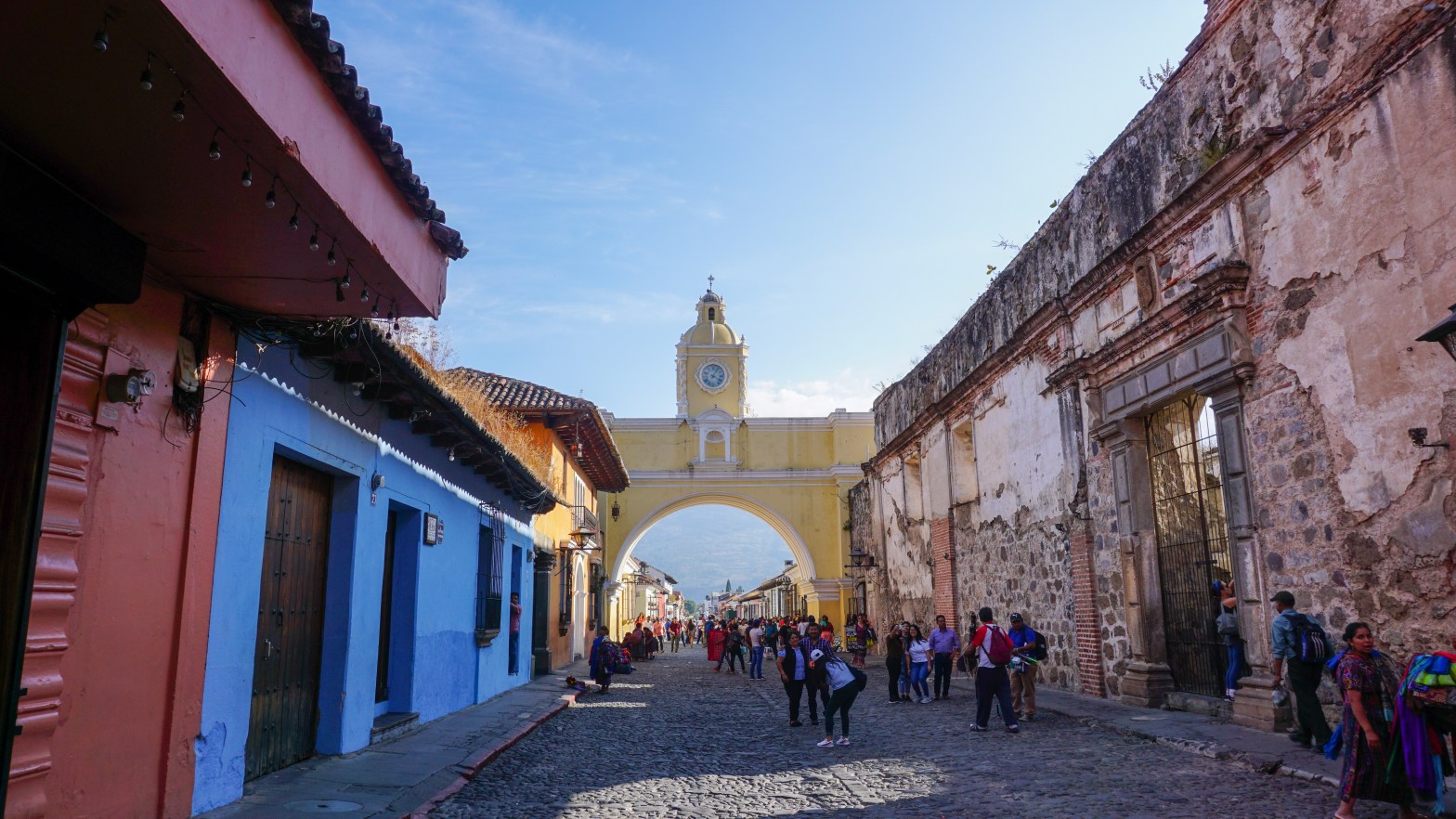
We were blown away by Guatemala’s beautiful people, colourful culture and abundance of natural beauty. A country we can’t wait to return to!
What we’ve learnt in Guatemala:
- Spanish! The country is brimming with affordable schools and the accent is known to be one of the easiest to understand. We took advantage and spent a week learning the language in Lake Atitlan.
- The Maya didn’t predict the end of the world, however, the 5126 year-long cycle in their Mesoamerican calendar simply expired in 2012.
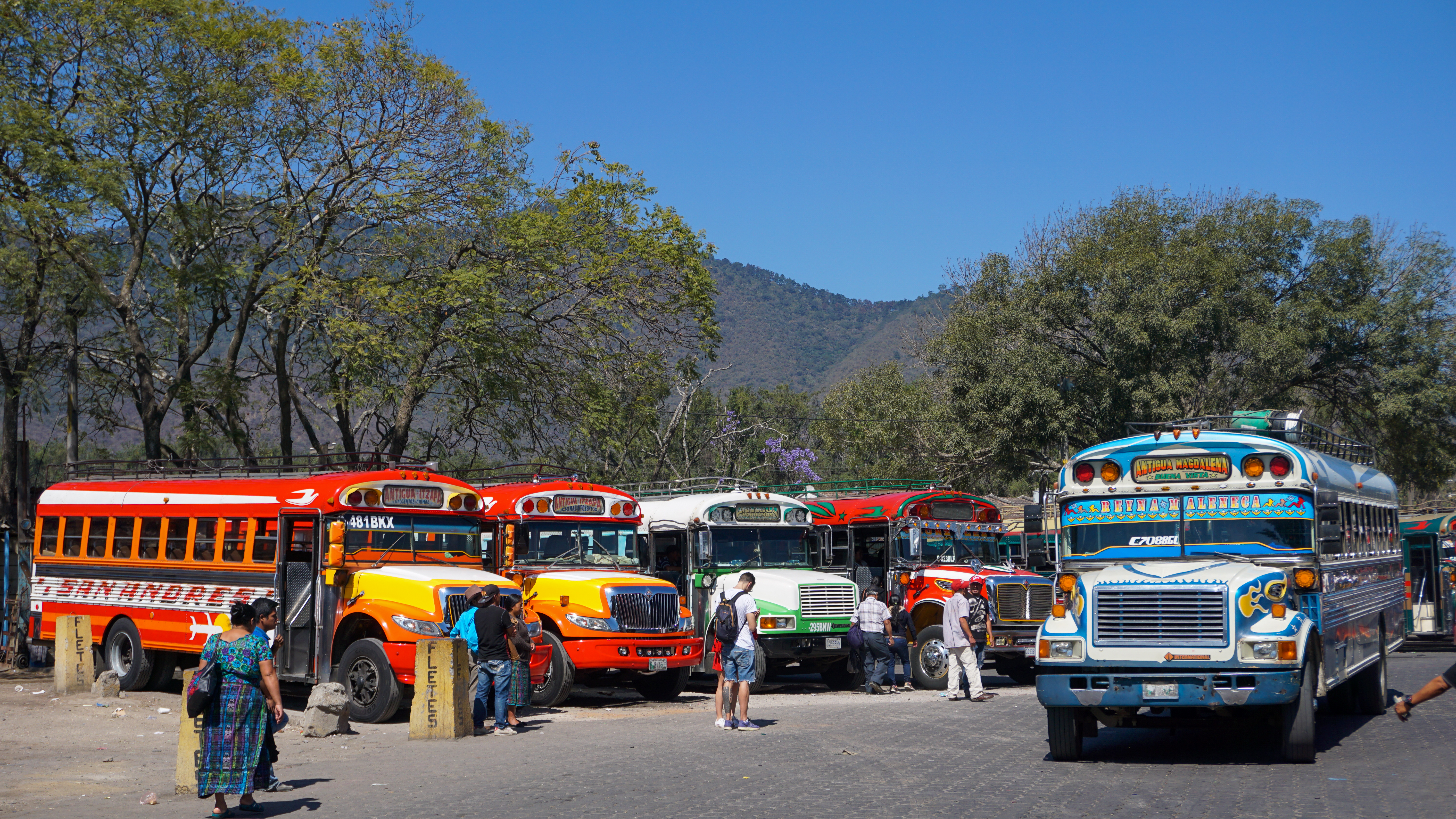
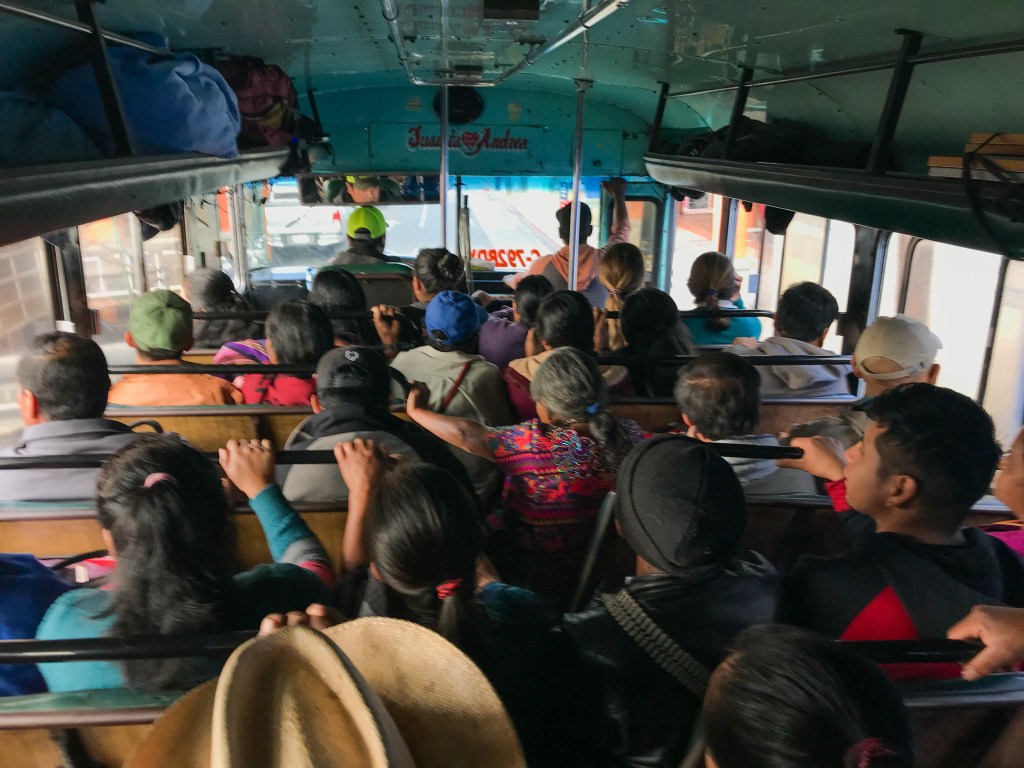
- Chicken buses are old American school buses that have been reincarnated into jazzy colourful ‘camionetas’, with interiors as bright as their exteriors. Used as the country’s public transport, expect loud Guatemalan music, three people squished on one seat and a bumpy ride!
- There are more than 30 volcanoes, with three still active. The last fatal eruption was in June 2018 when Fuego exploded.
- Guatemalans love firecrackers! It’s not uncommon to wake up and fall asleep to the sound of ‘bombas’ being set off in the street.
Tikal
We crossed the border from Belize and made the two-hour journey to Tikal where we would spend the night in the magical park. We didn’t realise how big the park actually was, 575km² of protected jungle with a wealth of wildlife and ruins. Over time, the structures have been reclaimed by the jungle and buried under mounds of soil and dense vegetation. In recent years, the use of laser technology has enabled archaeologists to discover more buried ruins. What looks like a hilly landscape to the naked eye, might actually be a pyramid waiting to be unearthed.

We journeyed towards the ruins in time for sunset and scaled one of the temples to watch the sky turn pink above the canopy. One of the local guides urged us all to be quiet so we could appreciate the magical sounds of the jungle. Several colourful pandemoniums of parrots flew over our heads and we spotted howler monkeys swinging between the branches.


The following morning, we ventured out at 6am to explore the park before the crowds arrived. We strolled through the dense jungle without seeing a soul and just listened to the animals wake up.


Flores
We made our way to Flores, a picturesque town situated on an island so small, you can walk around the perimeter in less than 20mins. We stopped over for one night, enough to enjoy our first colourful glimpse of Guatemala and some rooftop sundowners.


Semuc Champey
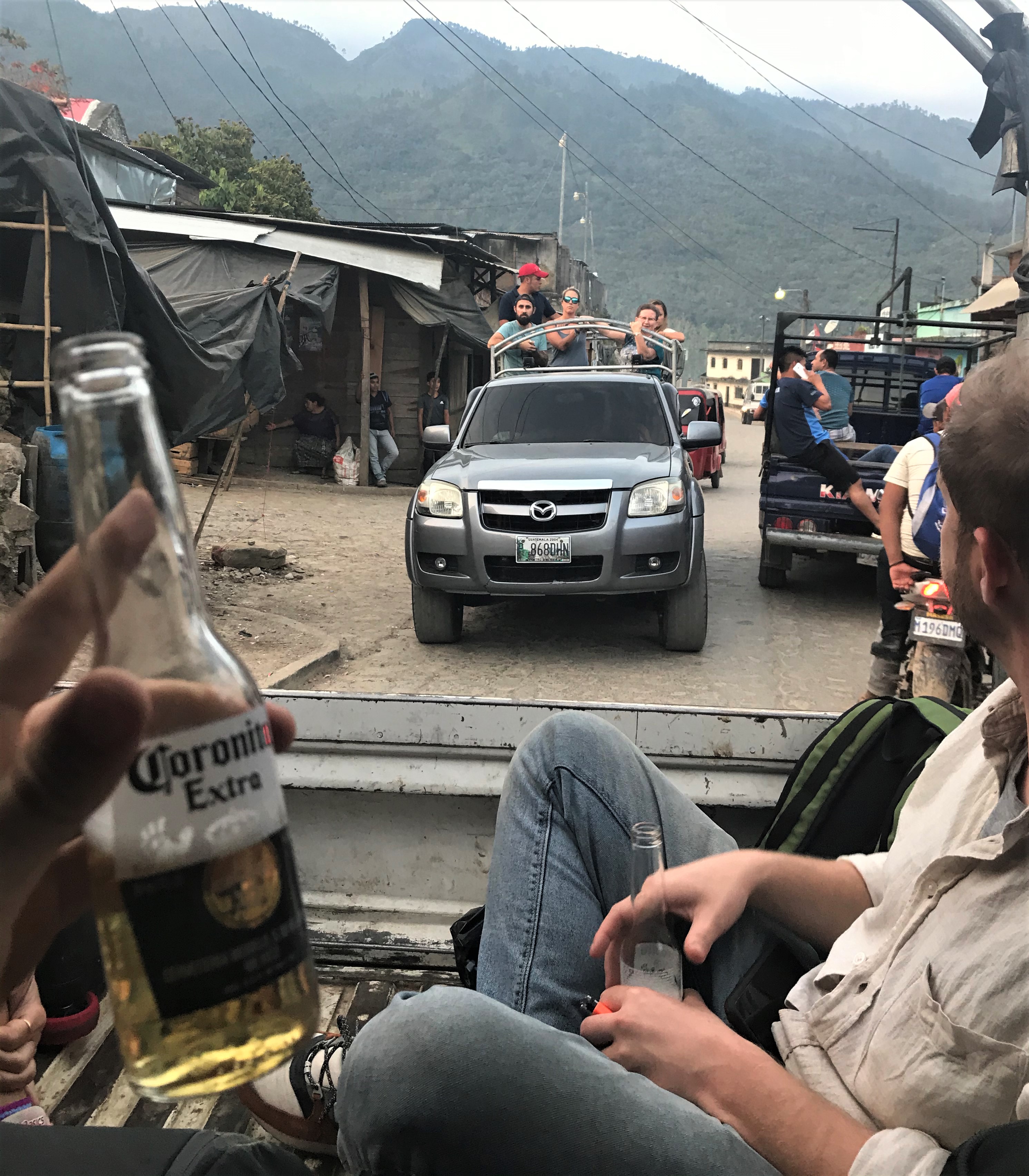
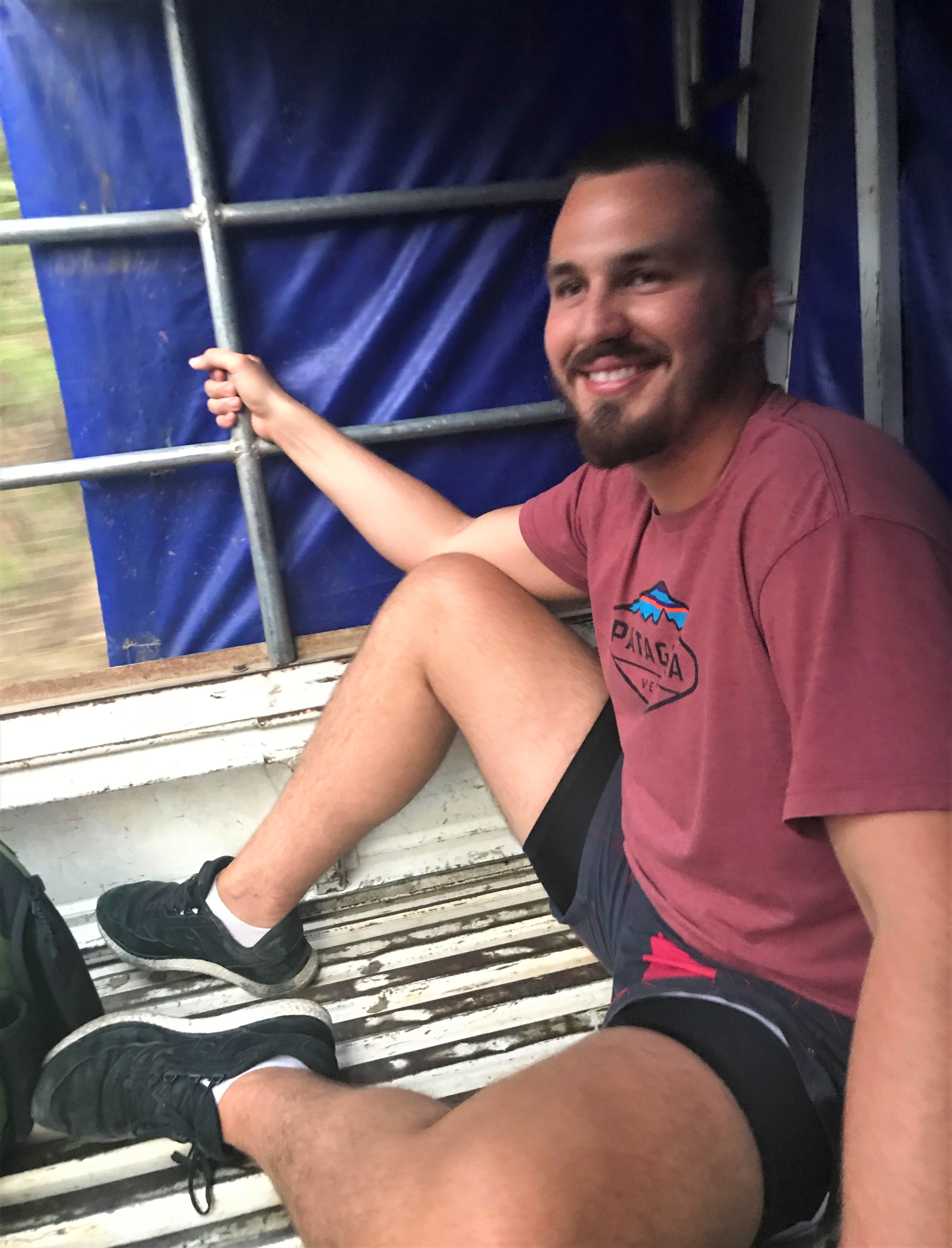
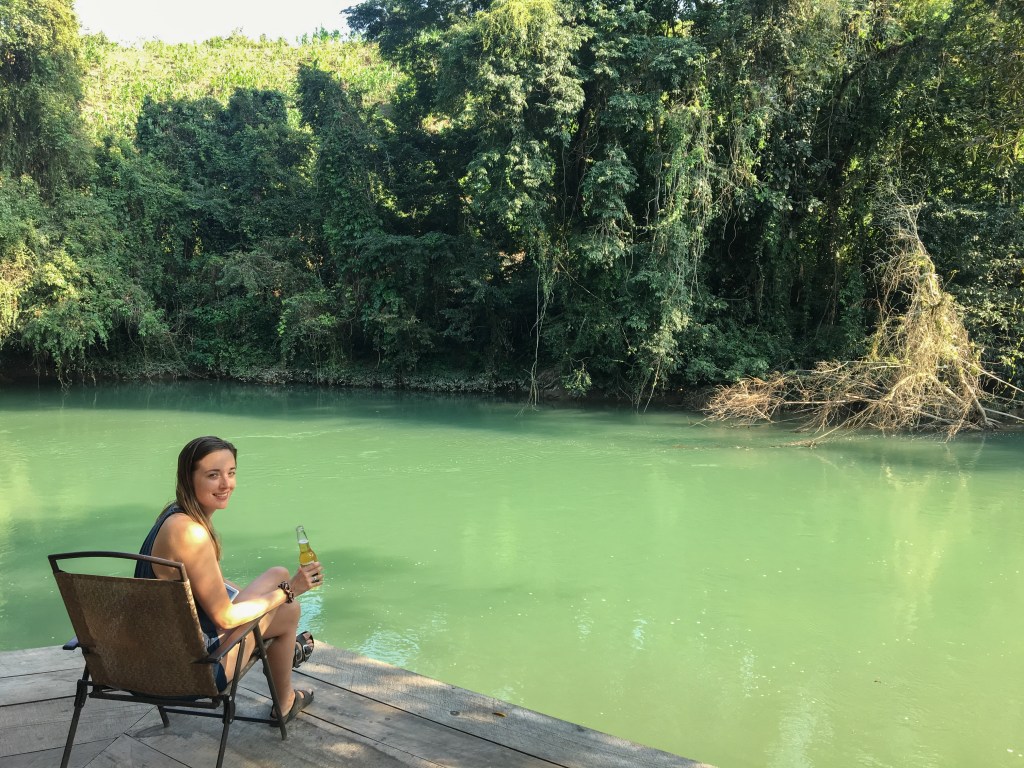
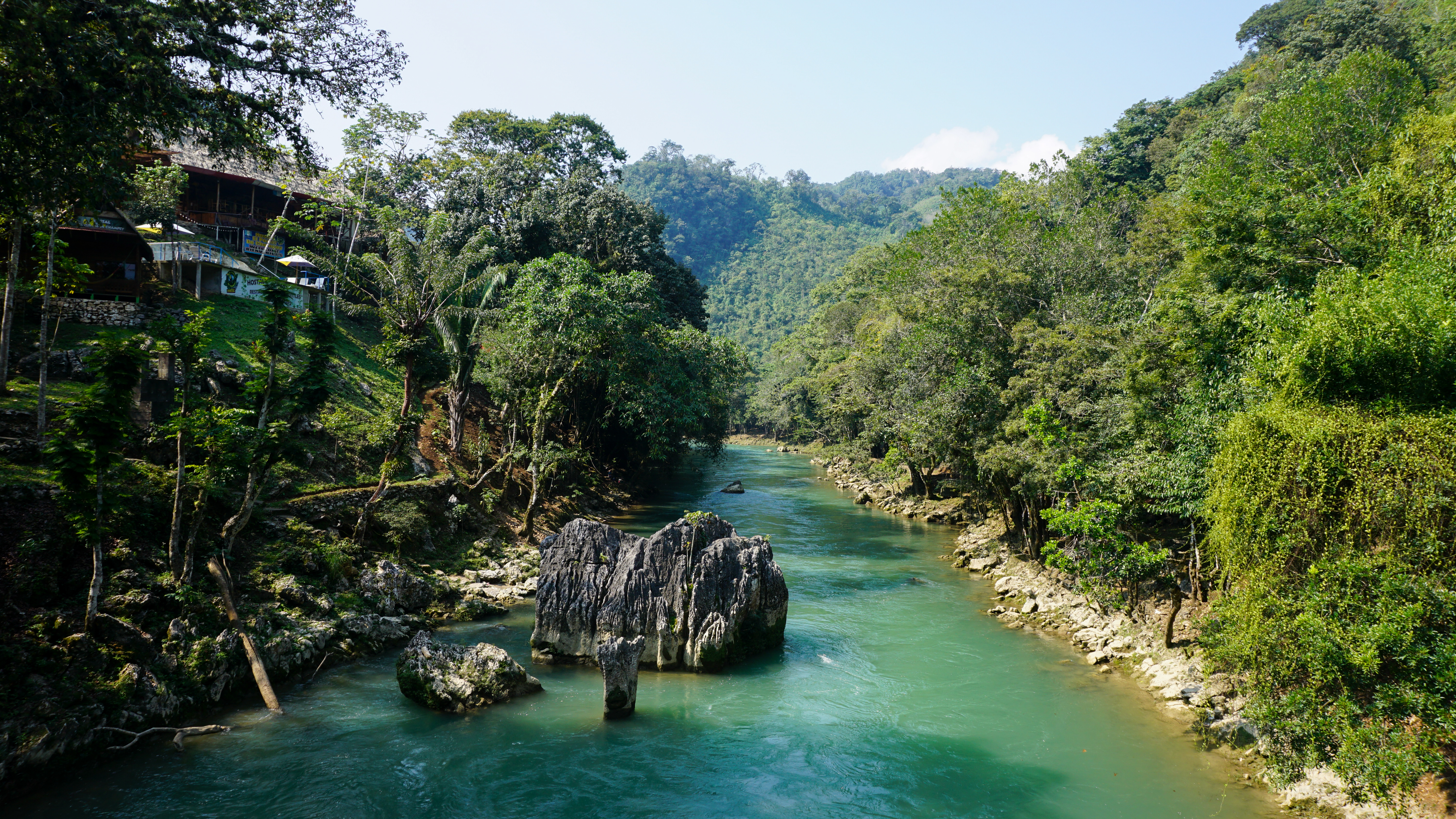
The beautiful springs of Semuc Champey are a hidden paradise tucked away deep in the jungle, only reachable by a scrappy truck, where passengers are loaded in the back like cargo. We bought some Coronas to enjoy that evening and naively decided to open one up as we embarked on the bumpy ride to our hostel. Clinging onto our beers, luggage and dear life, we arrived at our hostel bruised but excited.
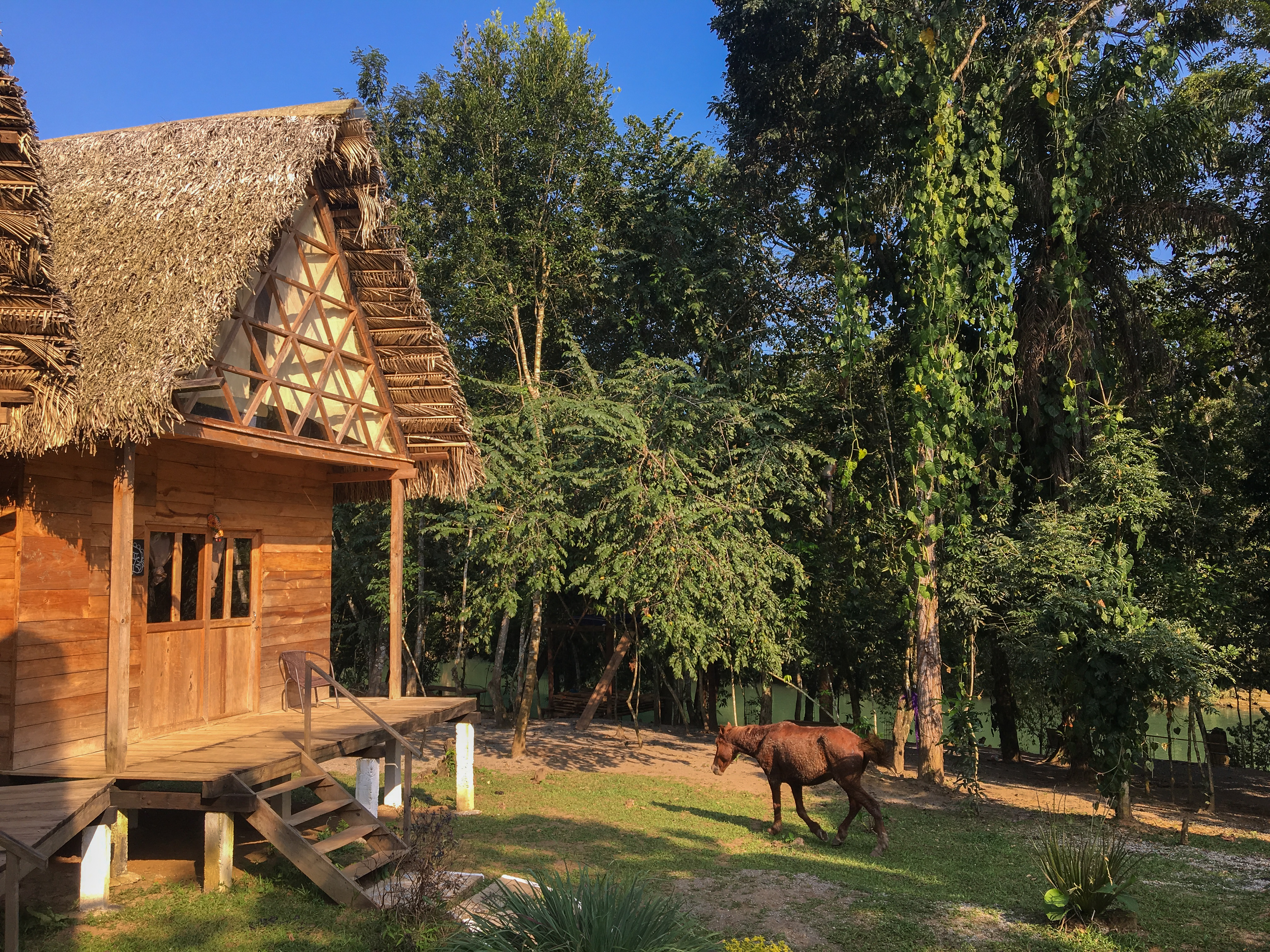
Our hostel was nestled by the river alongside roaming horses and the occasional group of people floating down the river on rubber rings. The rustic cabin tested Harvey’s resilience to spiders and Hannah’s ability to dispel them.
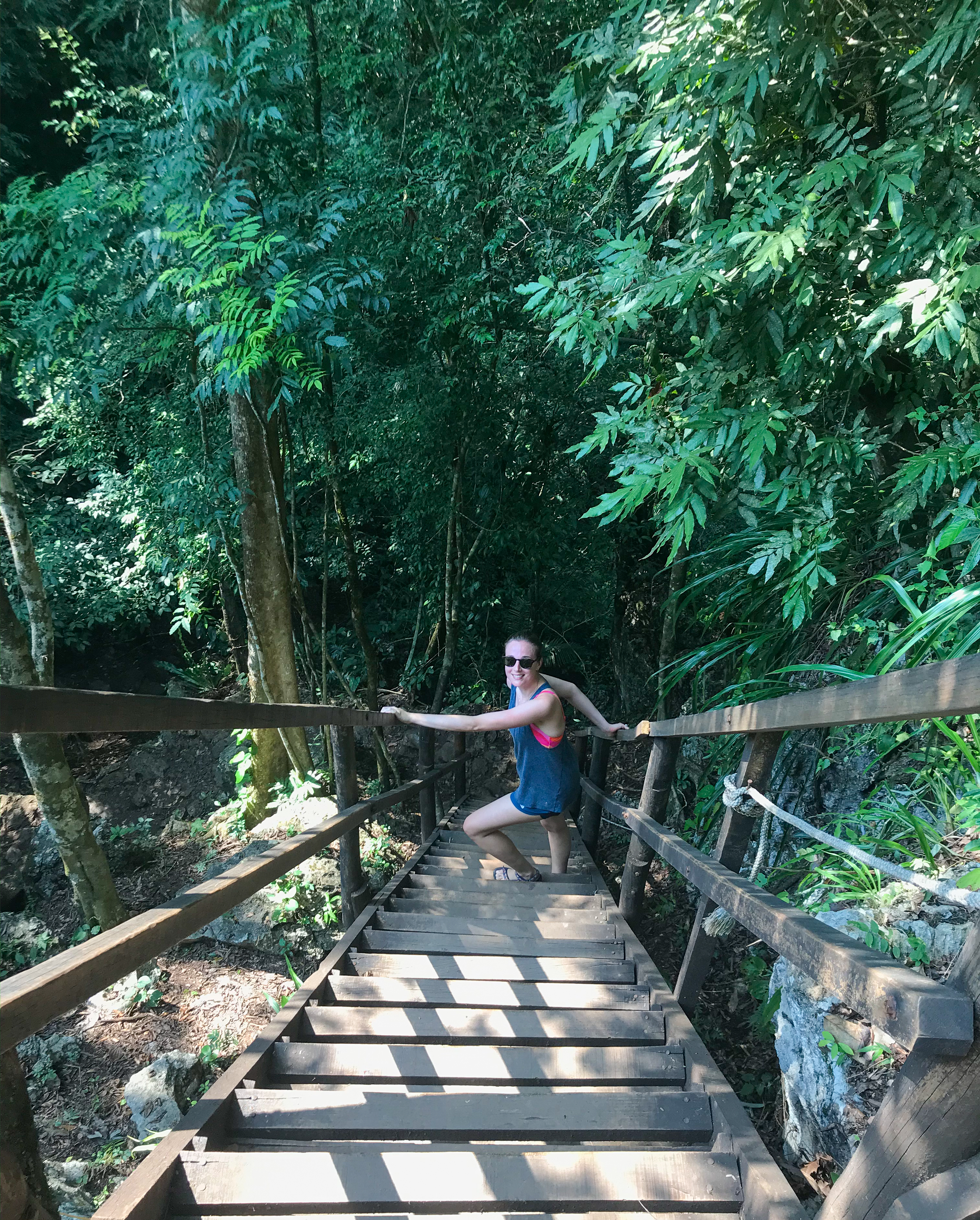
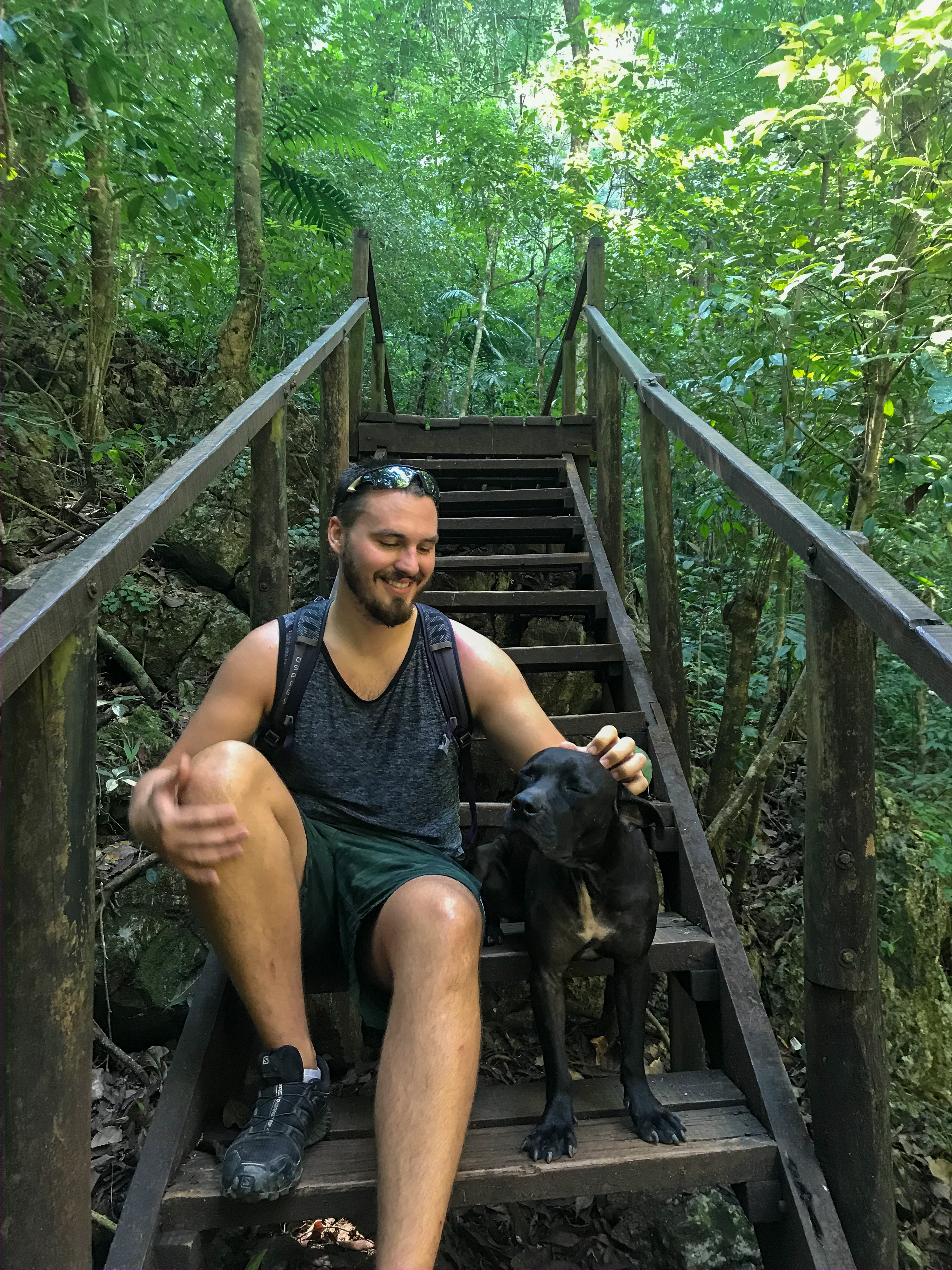
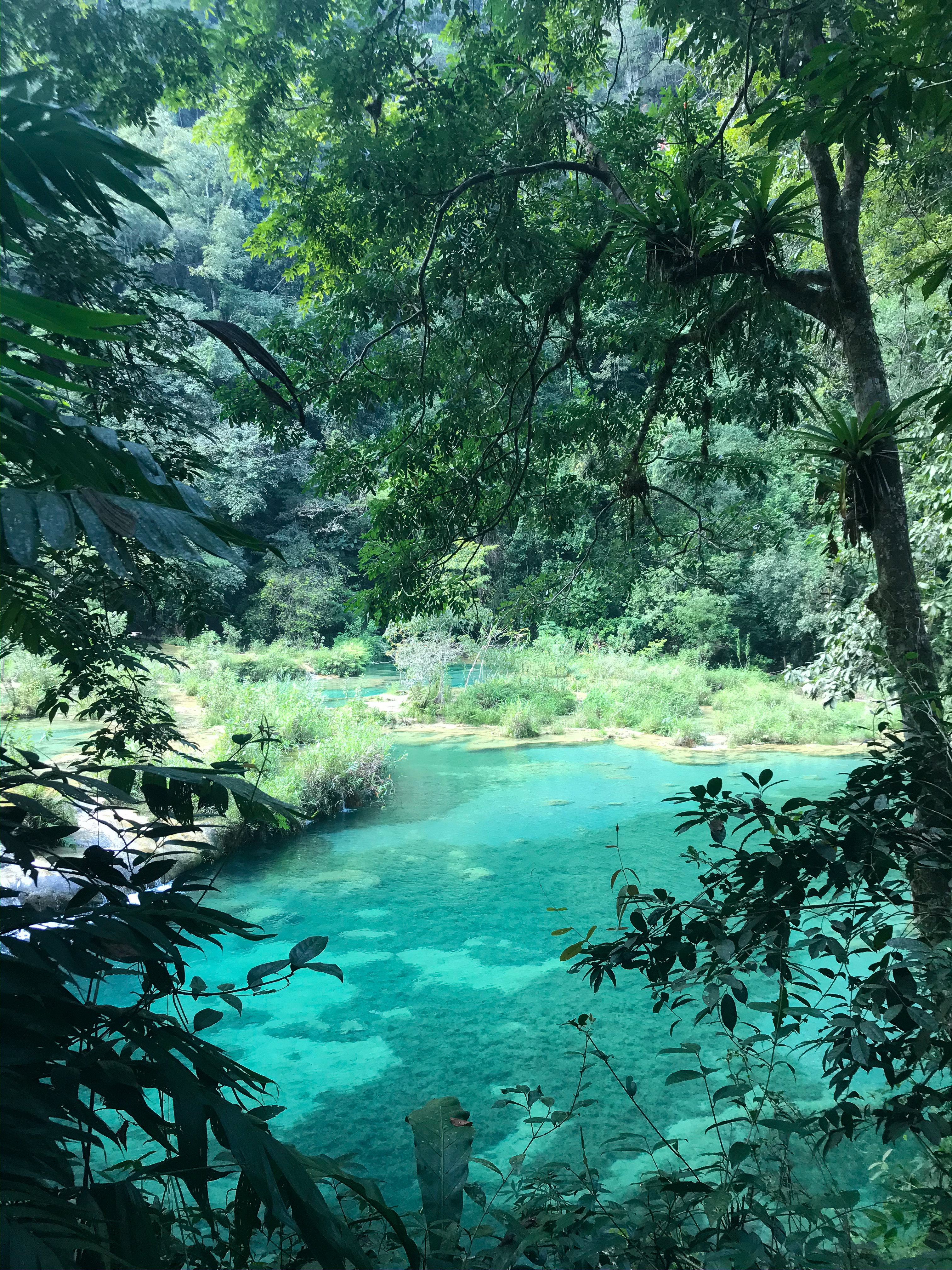
We started the following day by tackling the steep climb up to the mirador where we would get a bird’s-eye view of the valley and turquoise pools. We were accompanied by the dog from our hostel for the journey and drank coconuts along the way.
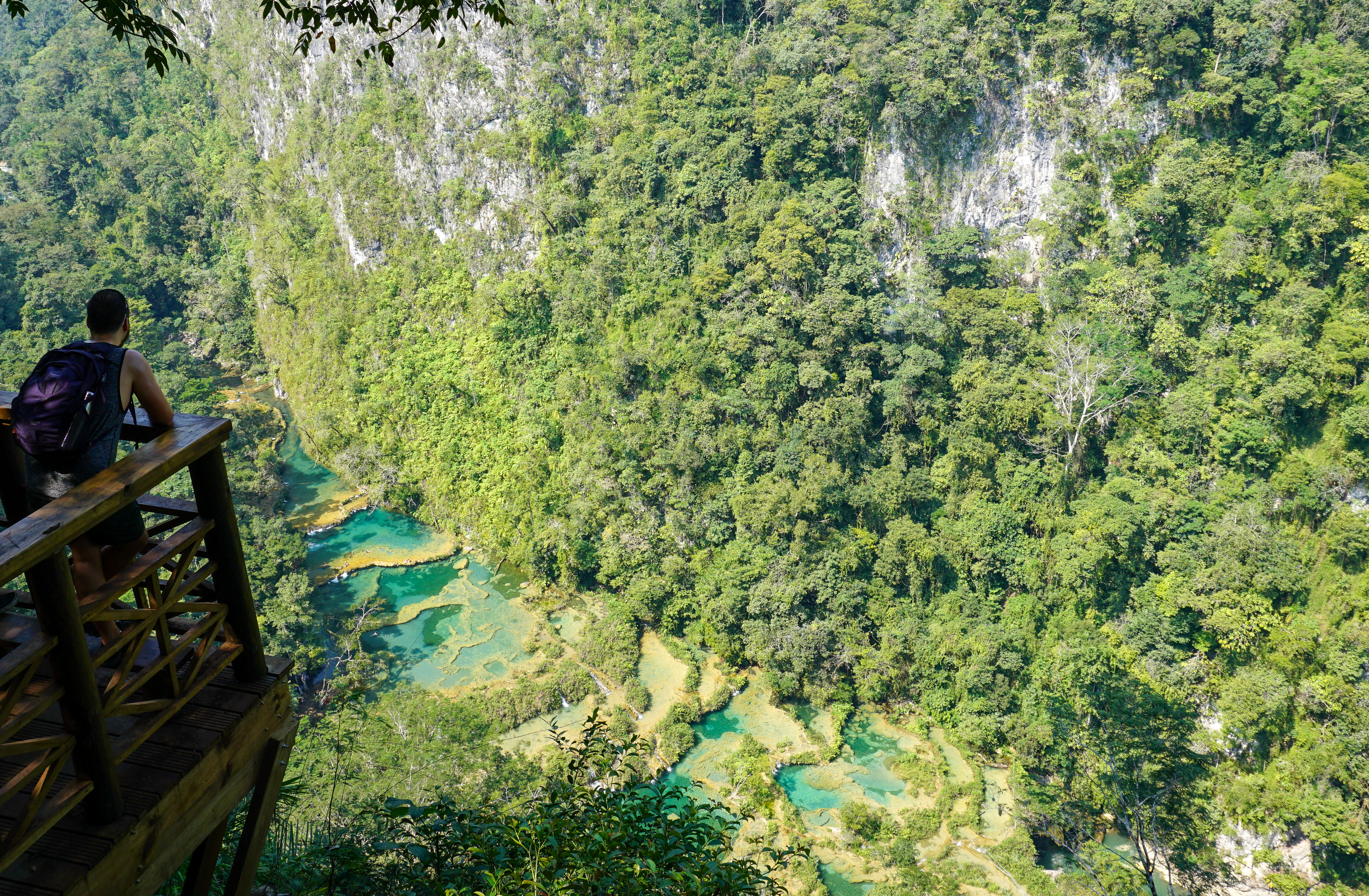
The pools were a refreshing reward after the sweaty climb. The clear water was also home to the little fish you associate with ‘fish pedicures’ – a bizarre sensation to have your body nibbled as you’re lounging in the pools.
We created our own canyoning experience by taking ourselves down the pools, finding slippery rocks to slide down and ripping the skin off our bums along the way.
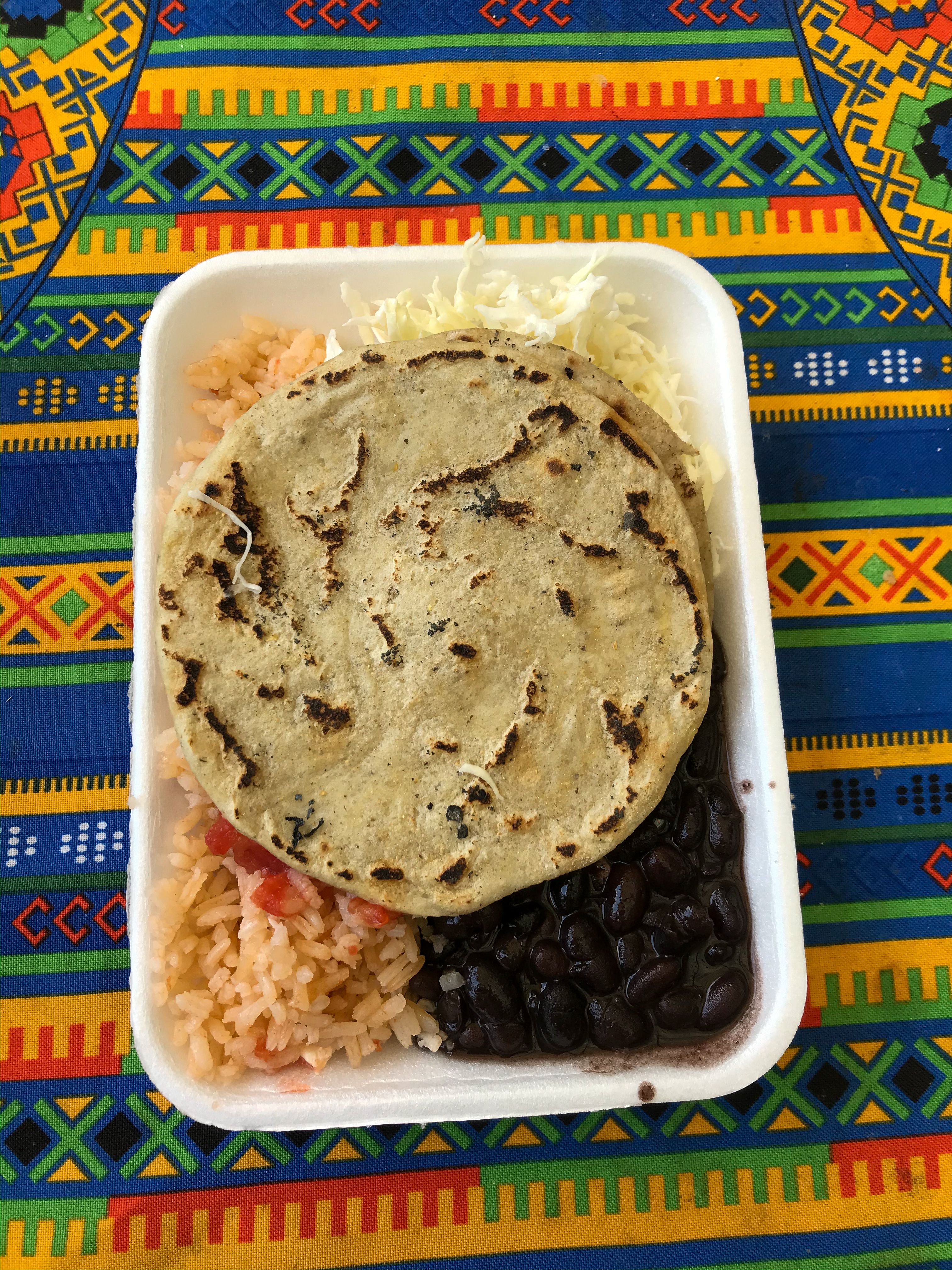
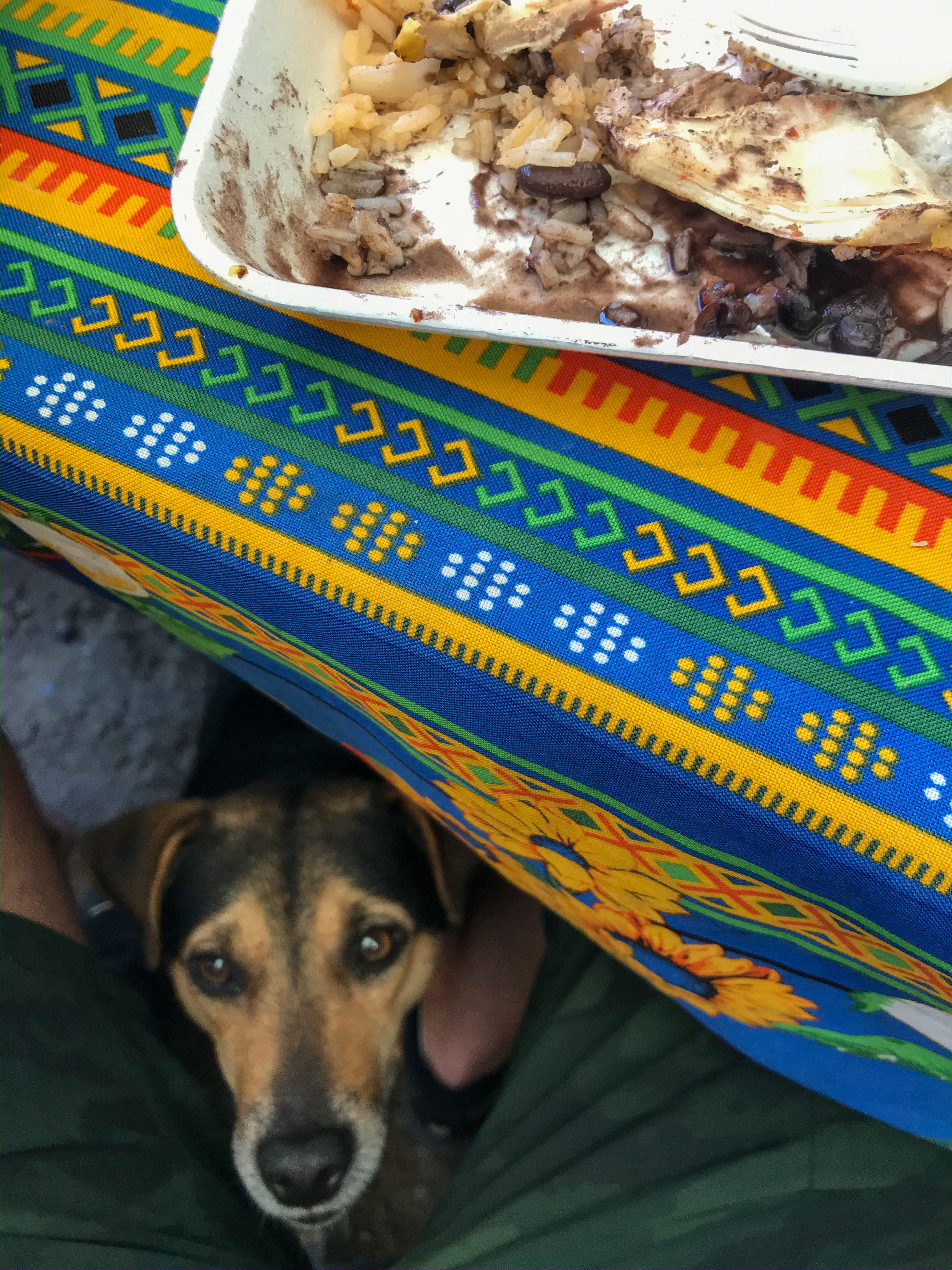
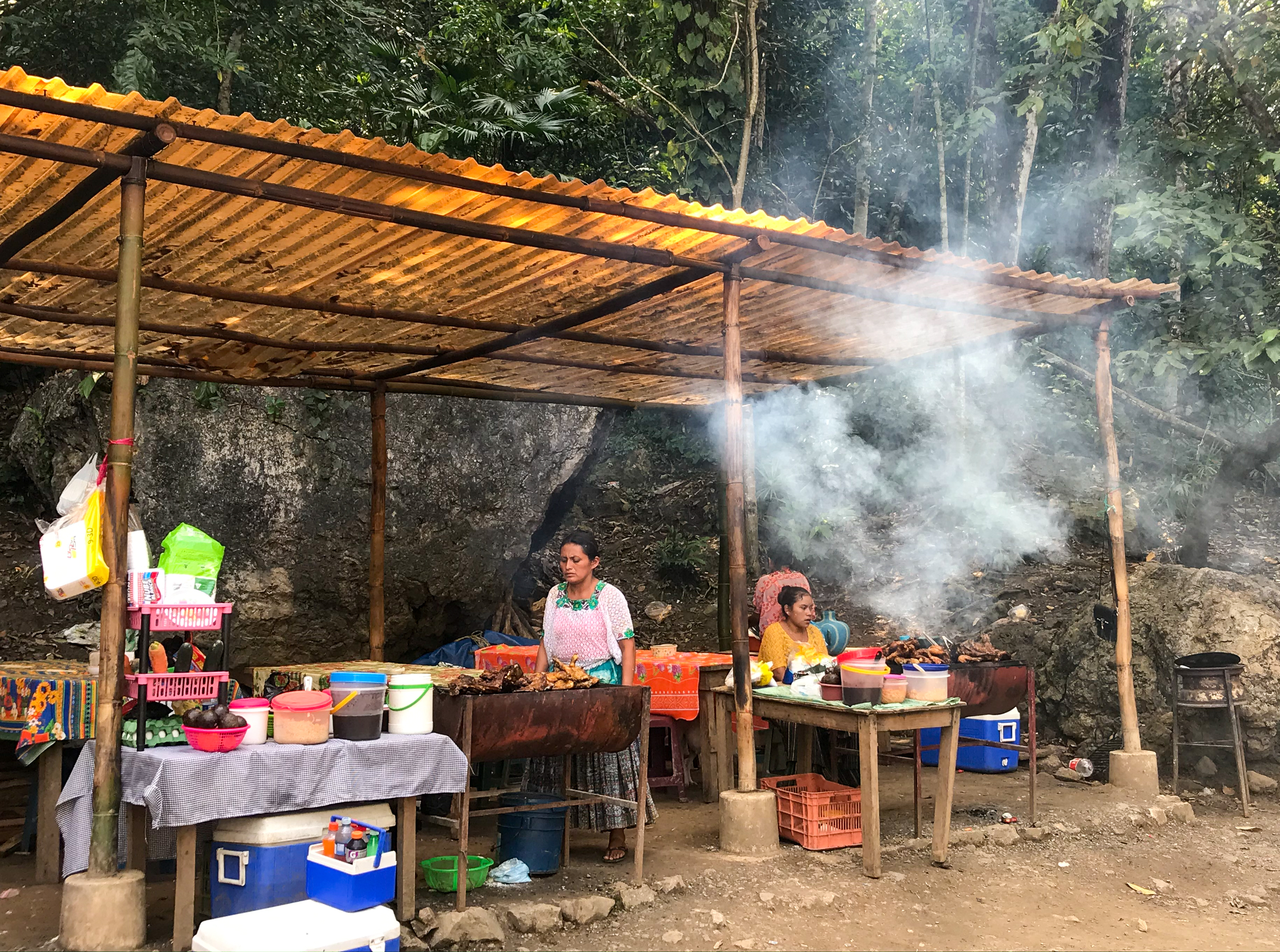
Vendors have set up shop by the entrance of the springs, providing little plates of goodness after a day spent in the water. We indulged in rice, coleslaw, beans, avocado and fresh tortillas, with dogs between our legs eagerly wating for leftovers.
Antigua
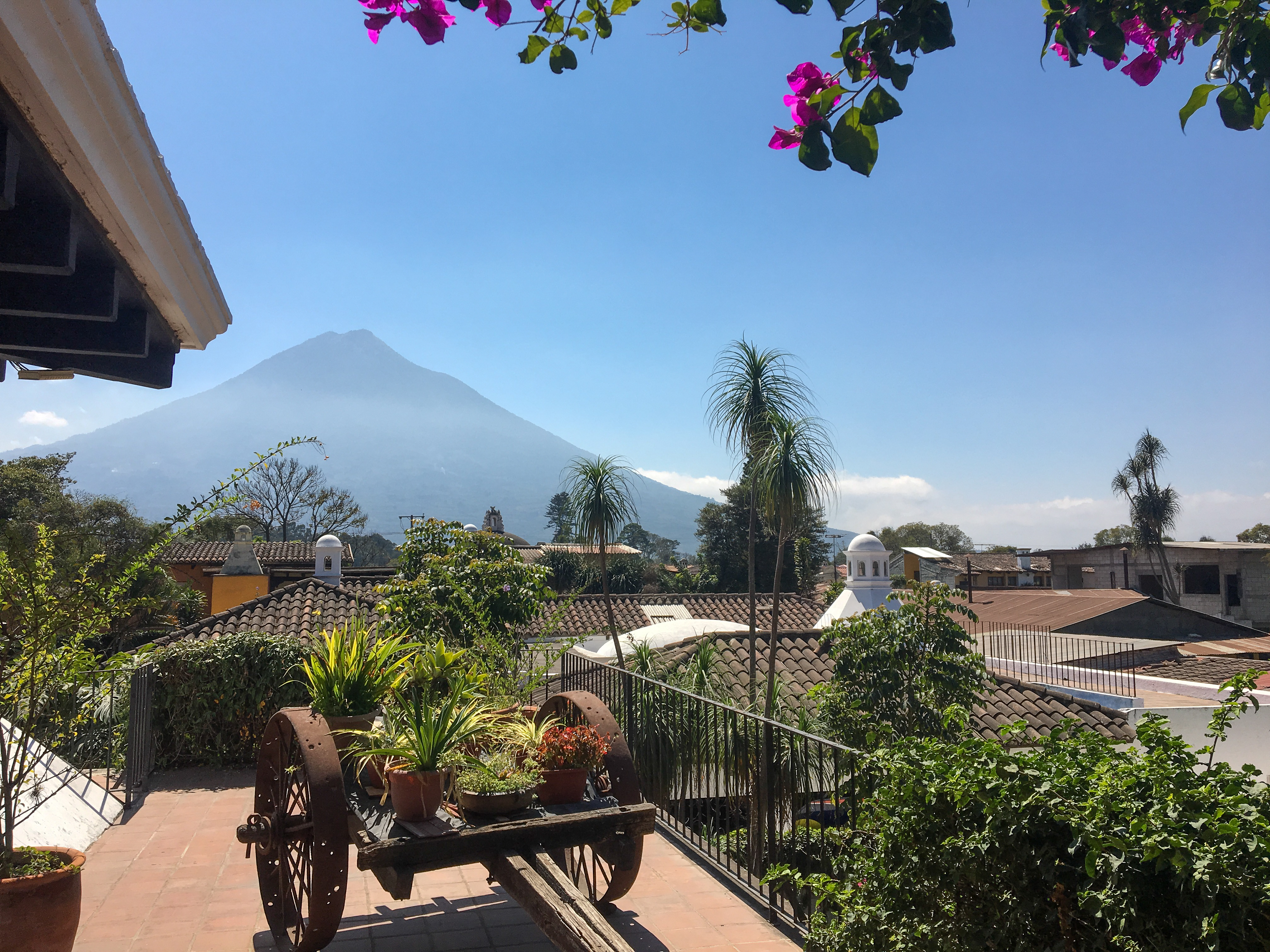
After a ten-hour bus journey, we finally made it to Antigua! It used to be one of the most powerful cities in Central America, with strong political, economic and religious influences. It was once the capital city of Guatemala, however, it was abandoned in 1773 after a devastating earthquake. Over time, the city re-established itself with its Spanish baroque colonial architecture and its ruined churches still stand proud.


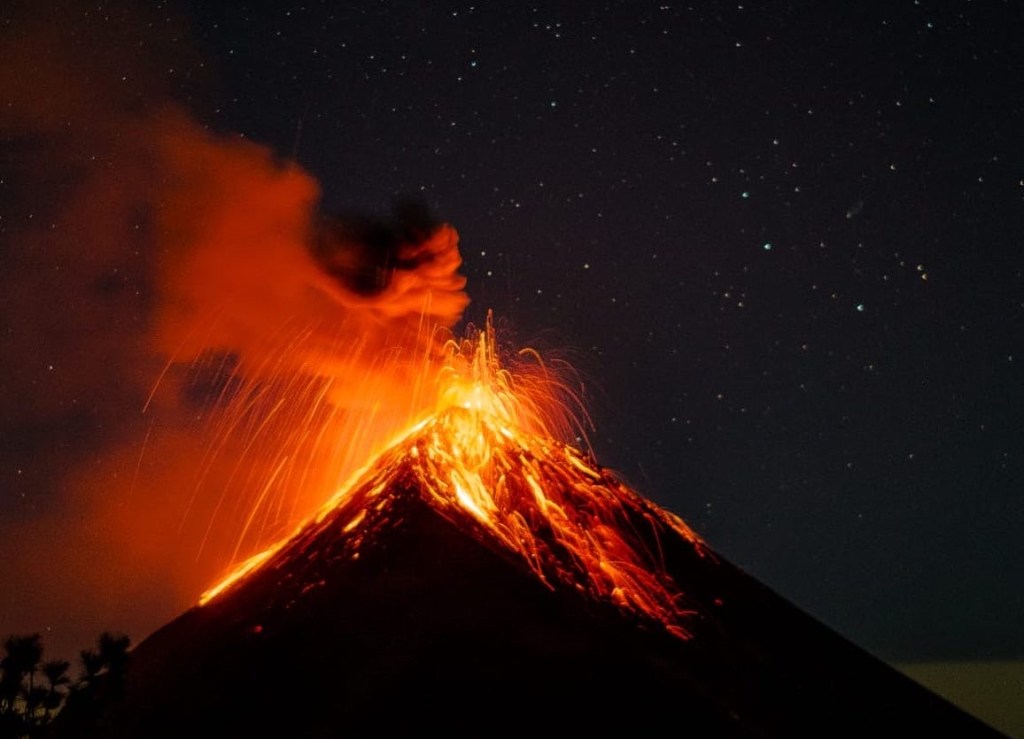
Our home for the week overlooked all three volcanoes, with the red lava spewing out of Fuego easily visible at night. Apparently, this is a common site, however, we lost our sh*t the first evening we saw it!
Additionally, we were very confused by the constant bangs heard all day and night, and after much speculation (guns, fatal eruption, troublesome youths), we soon learned that Guatemalans are absolutely obsessed with firecrackers! It’s not uncommon to walk down the streets and spot giggling adults from all different backgrounds, launching ‘bombas’ into the streets and at the feet of pedestrians. Ask any Guatemalan what’s the deal with the firecrackers and watch the cheeky grin across their face!
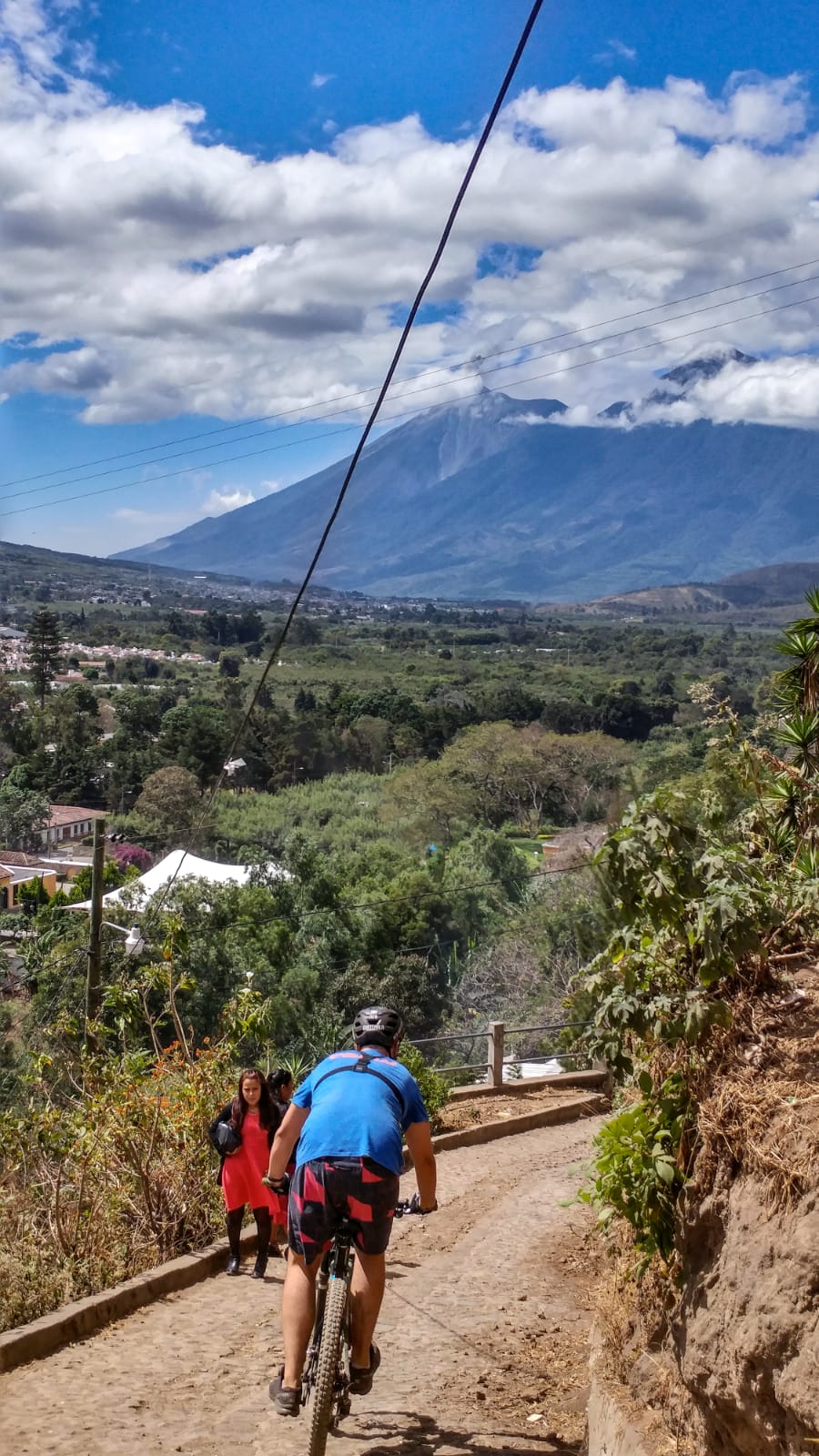
After a couple of days of walking around Antigua, Harvey took the morning off from crumbling churches and ventured off for some mountain biking. The ride was guided by Brendan, an American racer who took Harvey through the diverse terrain of pine forests, lush gullies and tropical vegetation (avocados, watermelons and bananas galore).
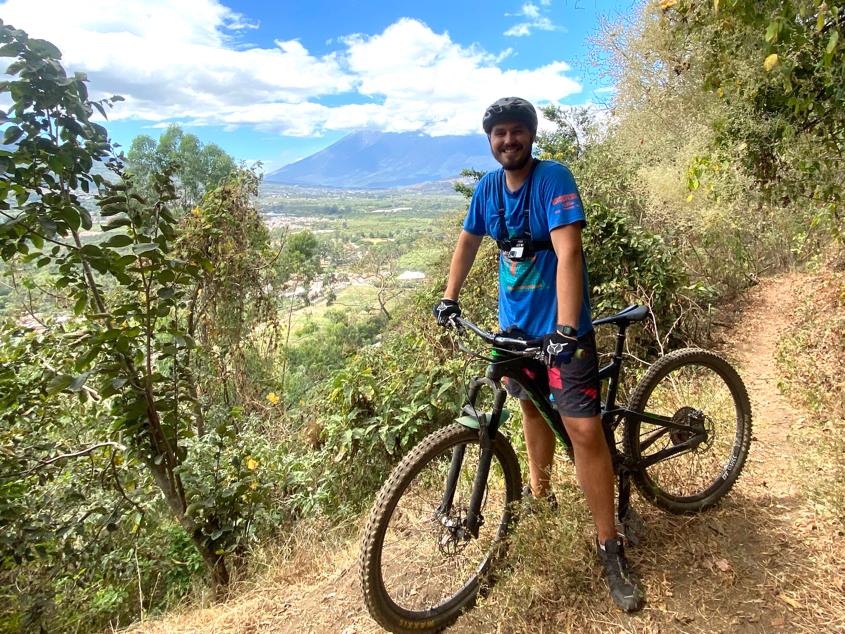
During the ride, Harvey also met Mike, an inspirational philanthropist who five years ago established a foundation with the mission to ‘provide education, food, medicine, and social opportunities to the poorest children of several communities near Antigua, Guatemala’. The following day, he invited us to visit the school at the heart of the foundation, Escuela Integrada. We weren’t sure what to expect, however, we encountered proud teachers, smiling children and impressive amenities (including a new computer lab much to Harvey’s delight!). The only plug you’ll see on this blog is our encouragement is to donate to this wonderful foundation.


Acatenango
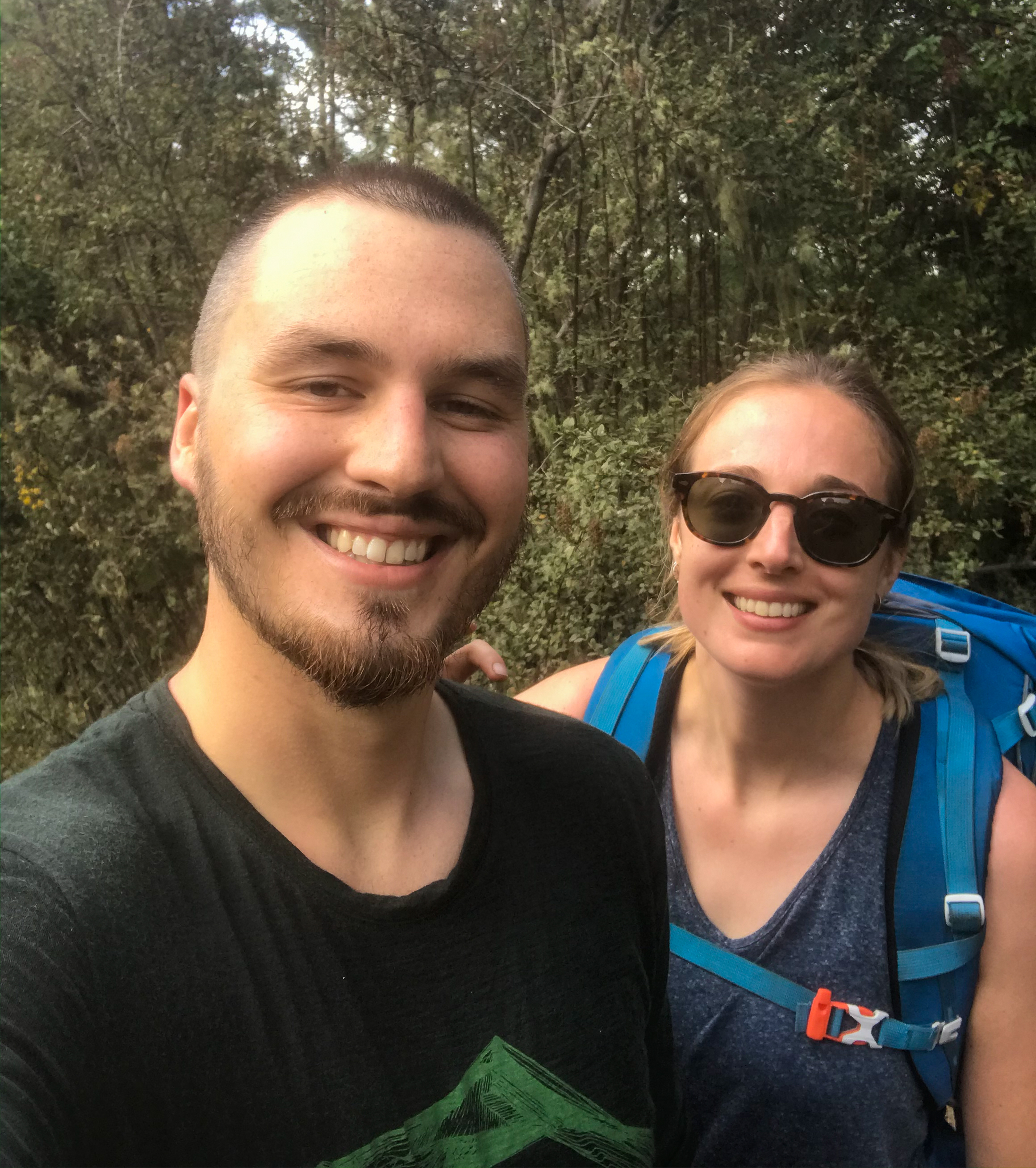
The moment we had both been dreading and looking forward to (but mostly dreading) had finally arrived – the two-day hike to Acatenango.
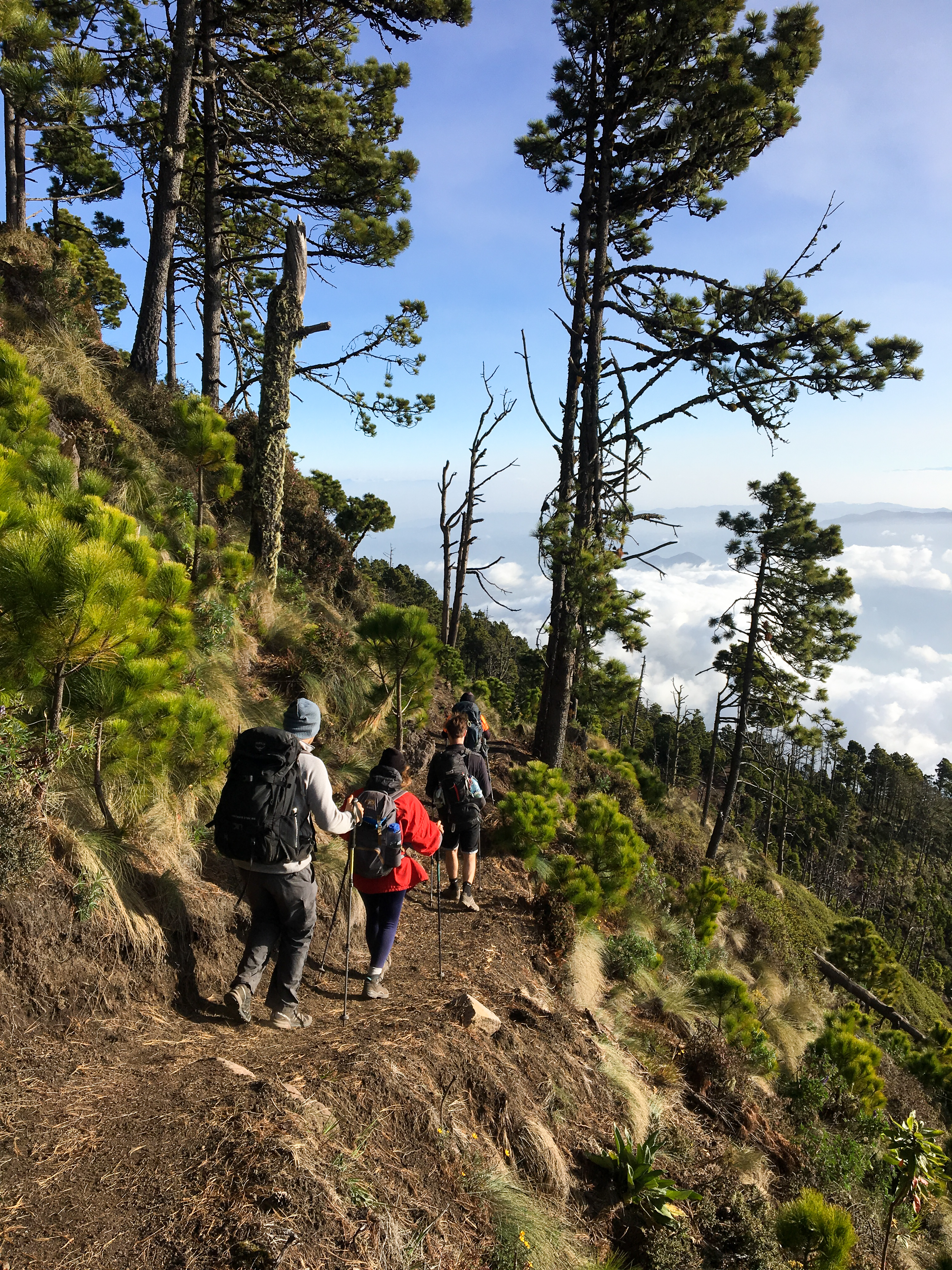
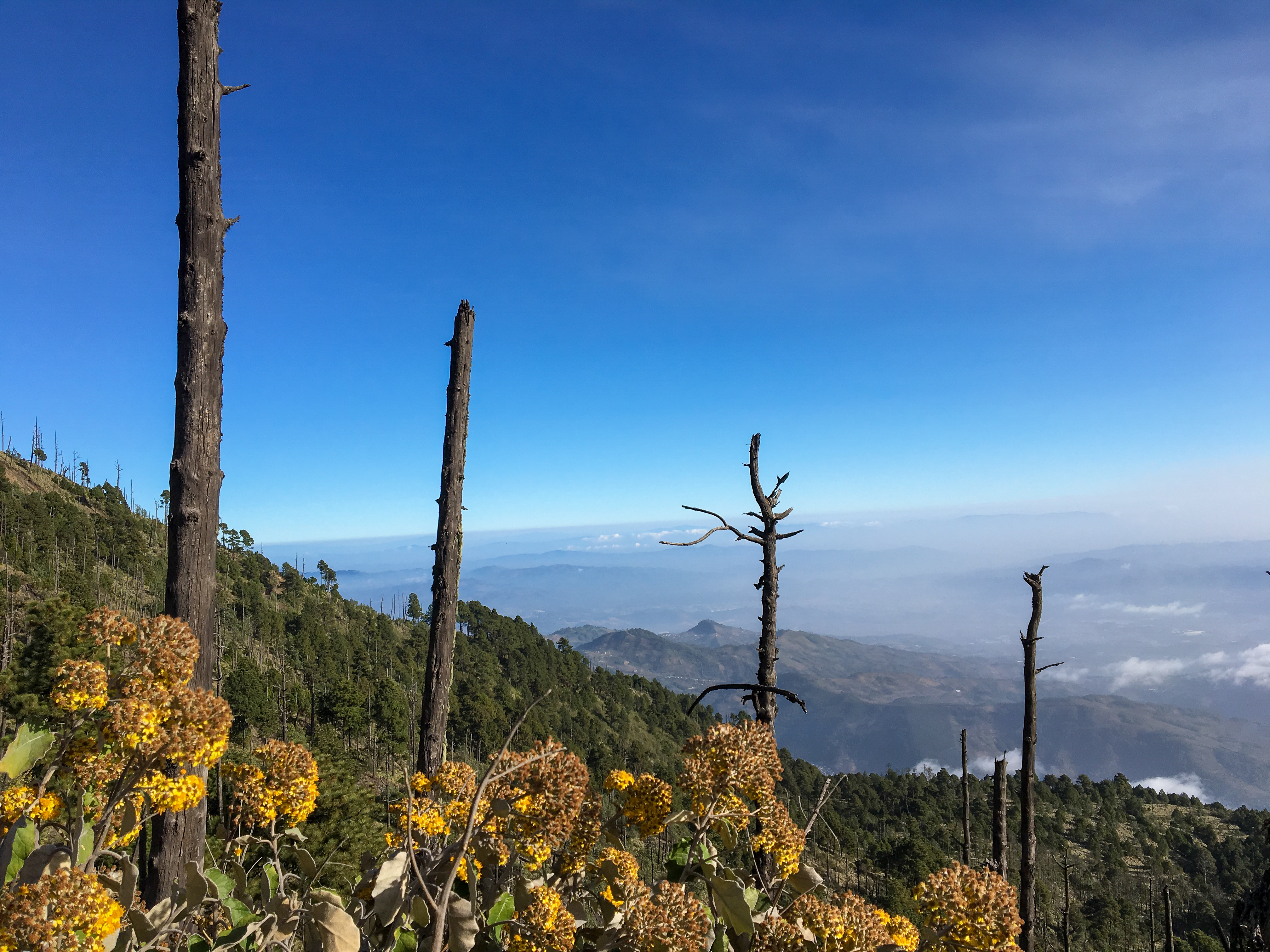
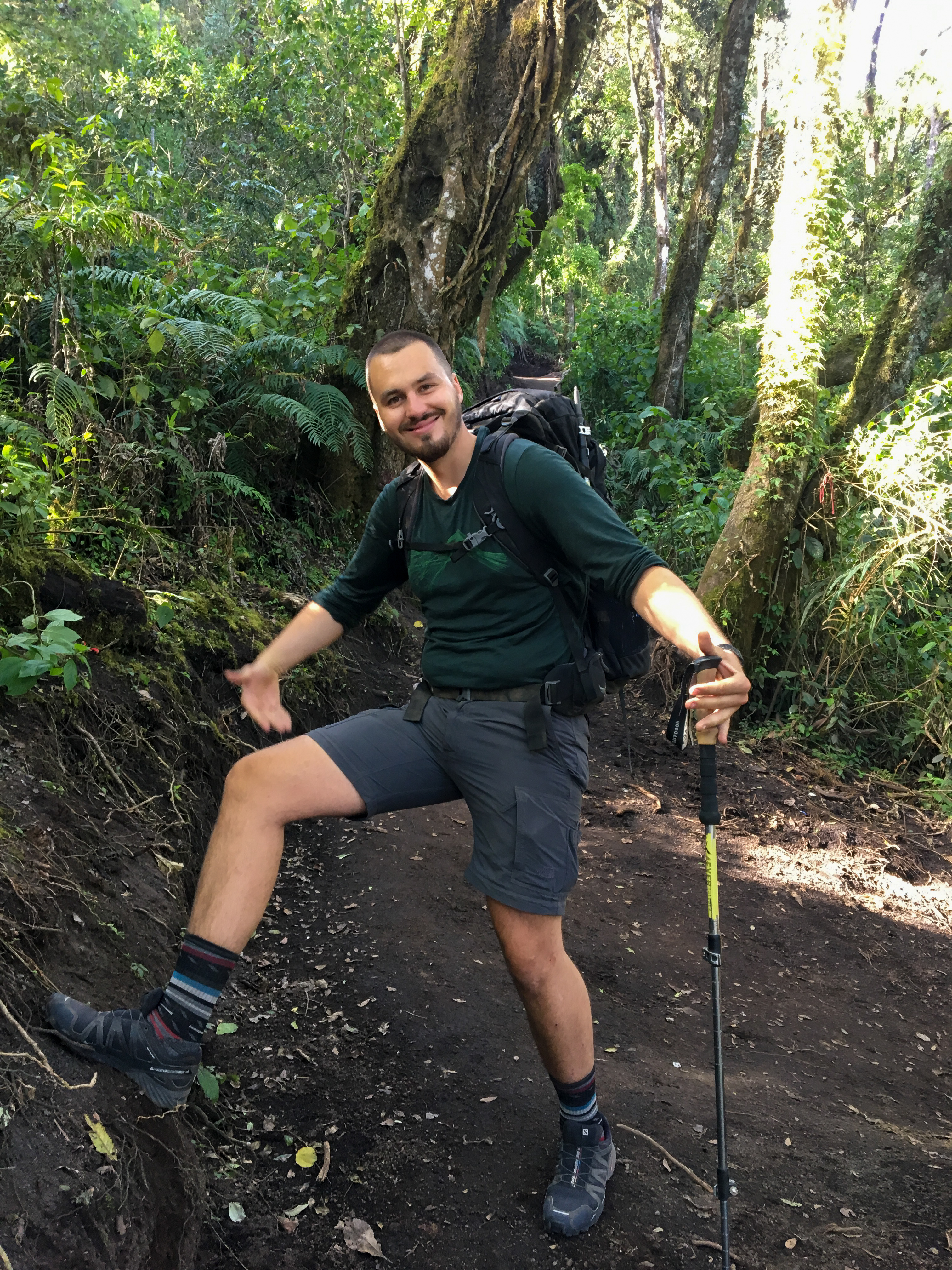
Spirits were high as we changed into our gear and made our way to the start. The initial uphill segment was a steep and gravelly slog, made harder by the punishing heat and lack of shade. We crossed paths with the descending group from the day before, who shot us discouraging looks of sympathy and the occasional reassurance of “it’ll be worth it!”.
As we proceeded to climb, the group of 30 quickly divided itself into four categories: full kit wankers, surprisingly fit rookies, hungover youths and the type 2 diabetic. We’ll let you decide where we both fit in.
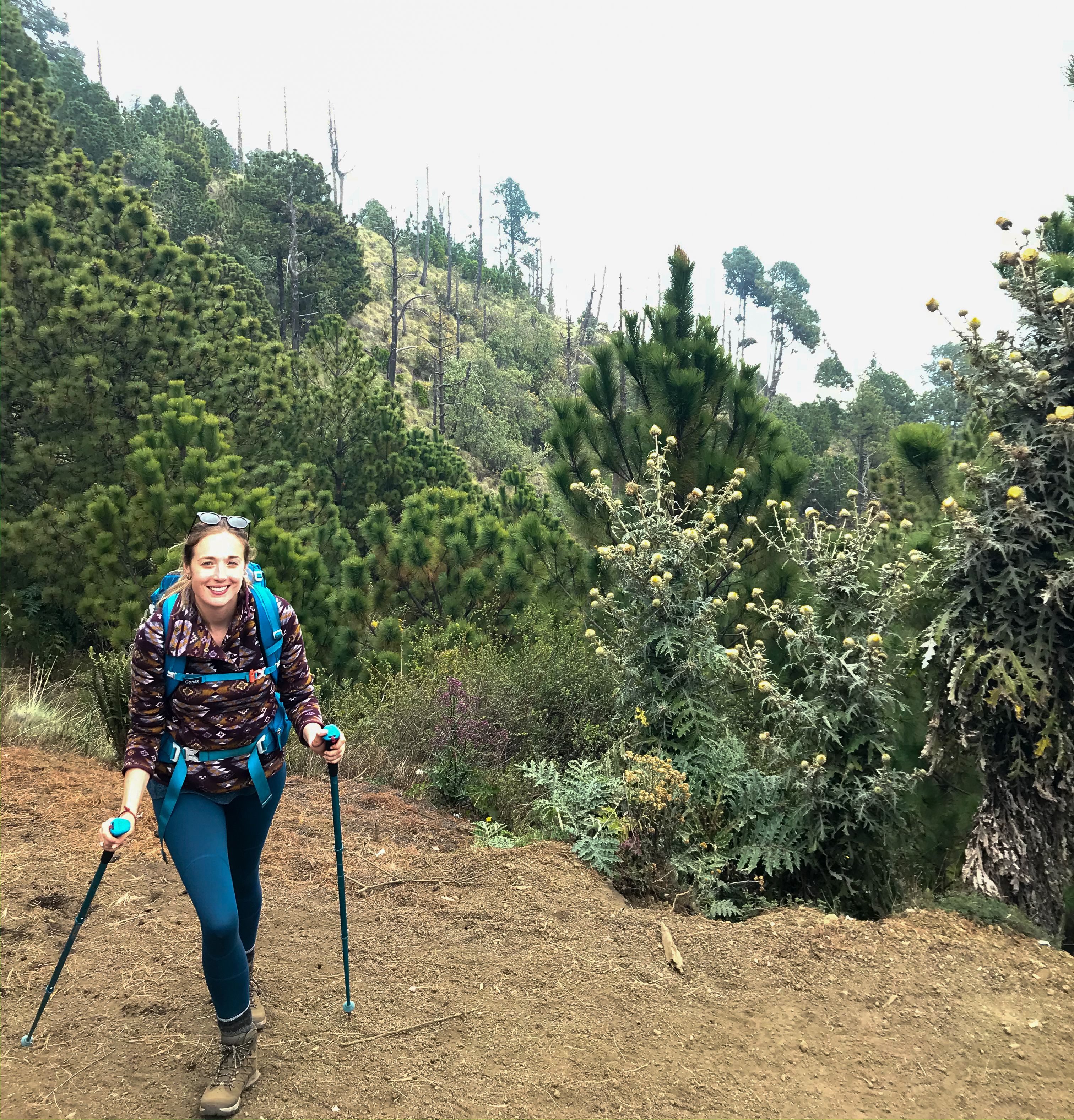
After 4 hours of technical climbing, we reached base camp and were elated by the fantastic view and rumbling roar of the active Fuego volcano.
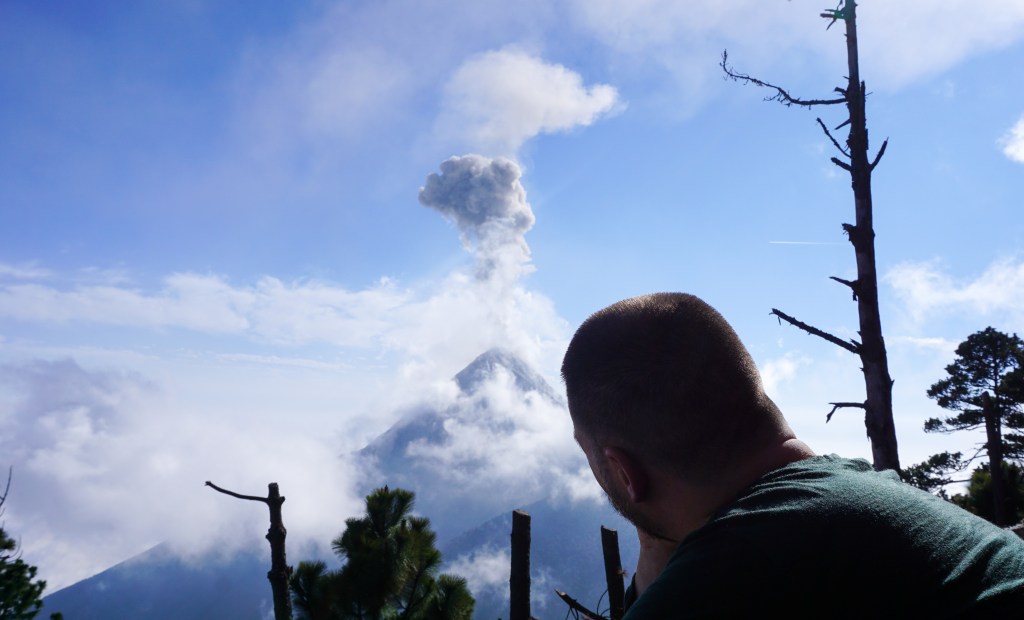
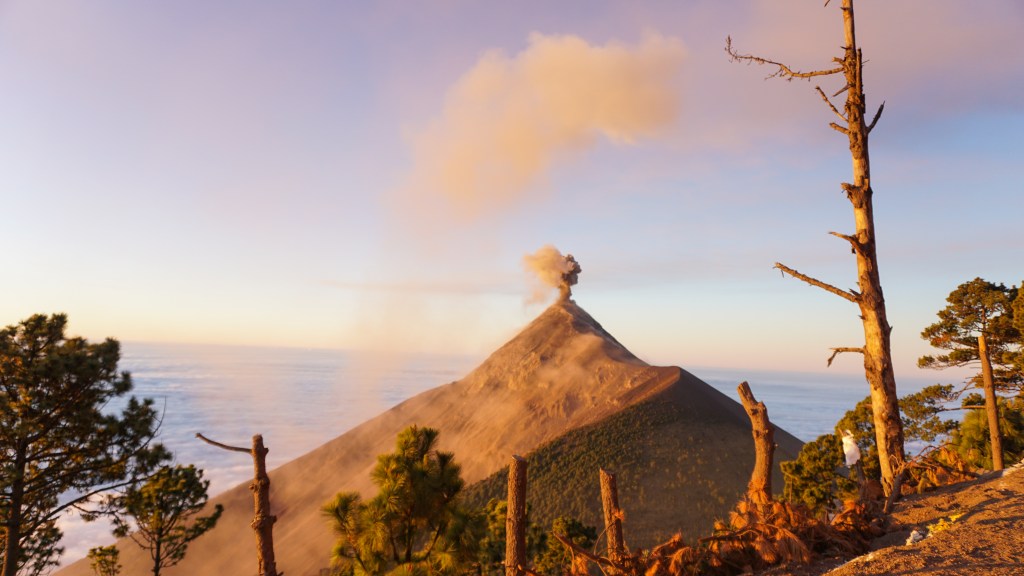
We sat back in deck chairs along the ridge and prematurely celebrated our accomplishment. We were promptly told we were leaving for the summit in five minutes – the most difficult segment of the climb. The first half consisted of loose volcanic gravel, where we slid down after every forward step. This was followed by a scramble up an exposed ridge and trail across black plains, where we were eventually met with unparalleled views above the clouds.
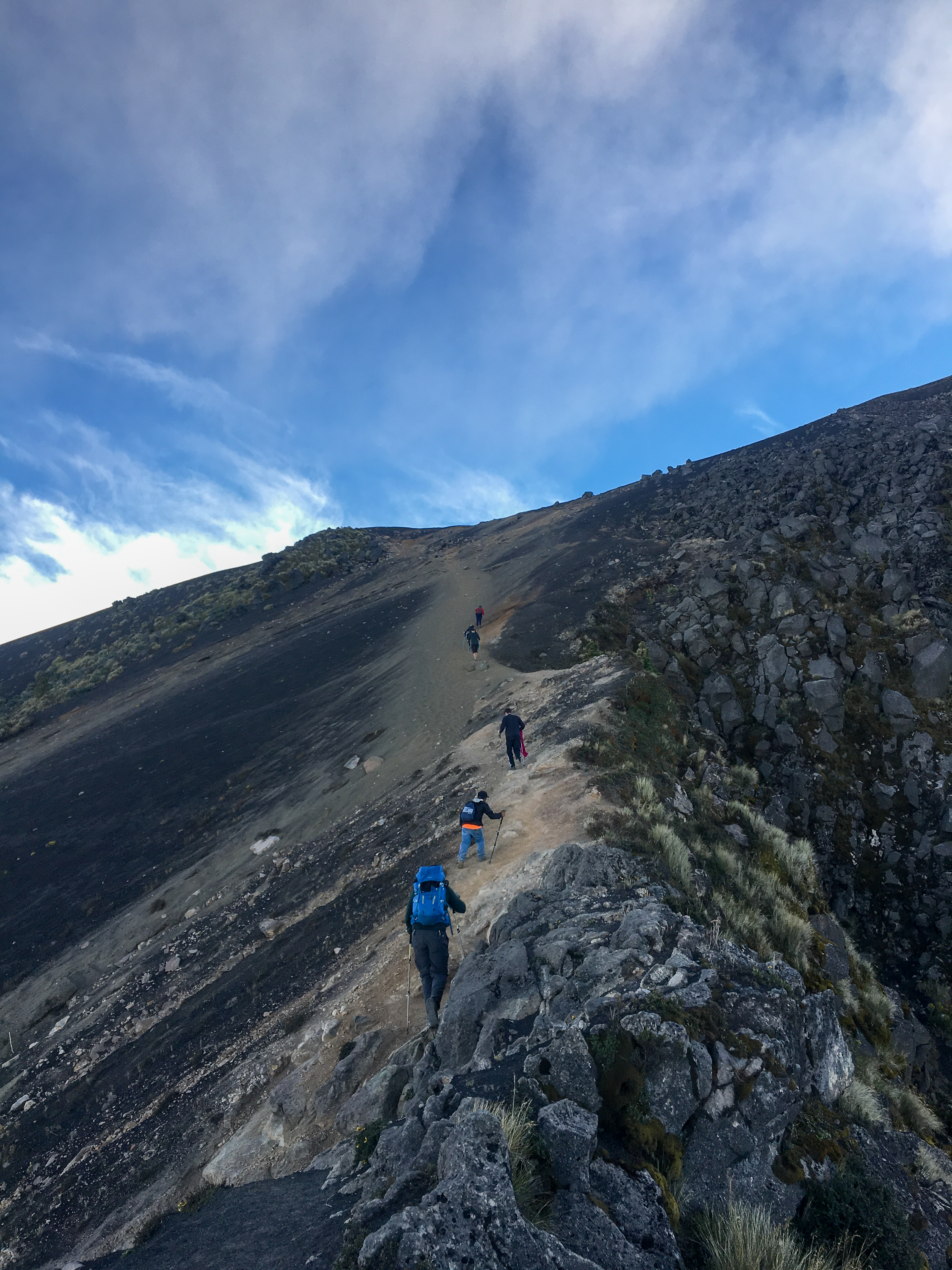
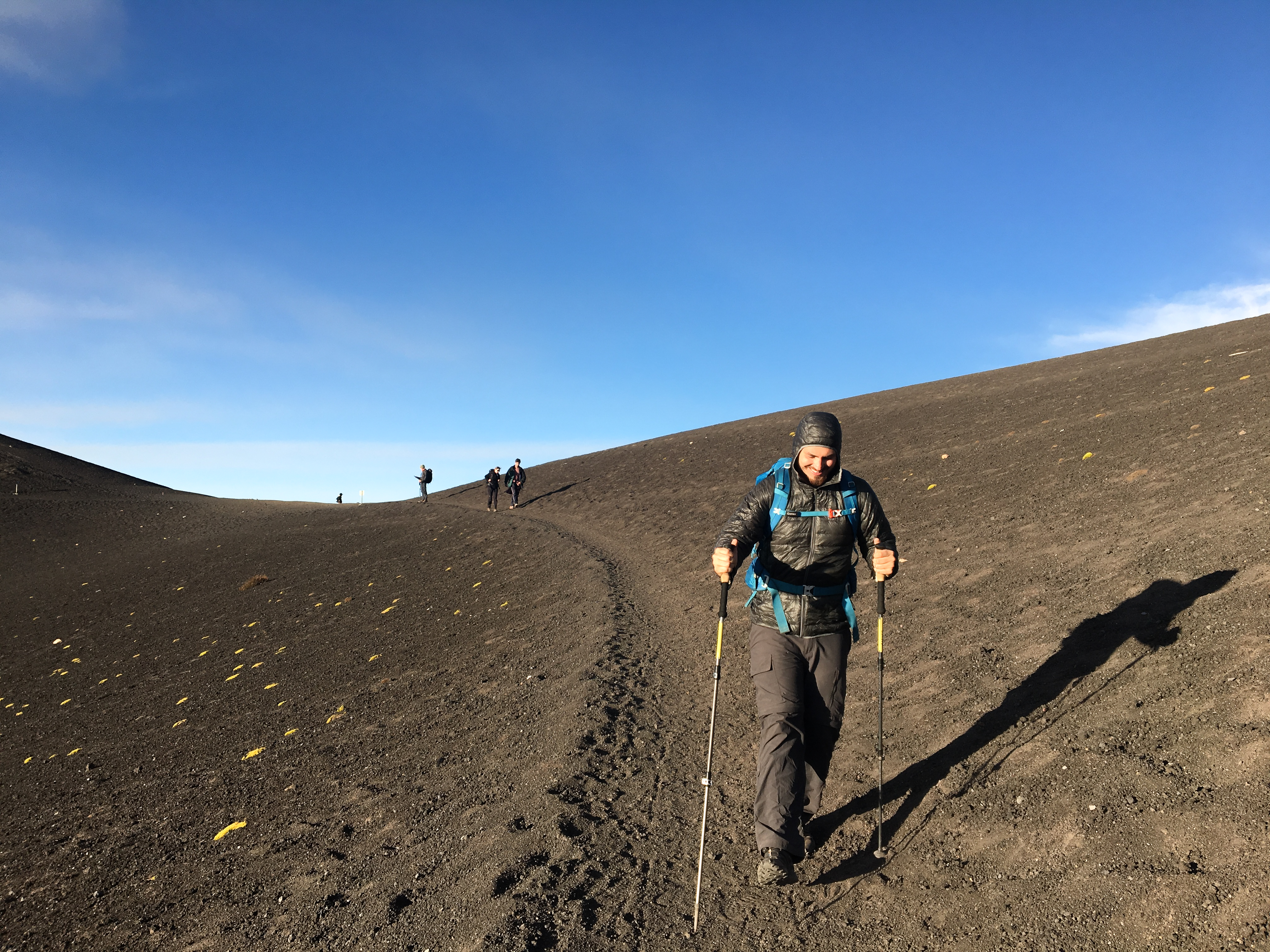

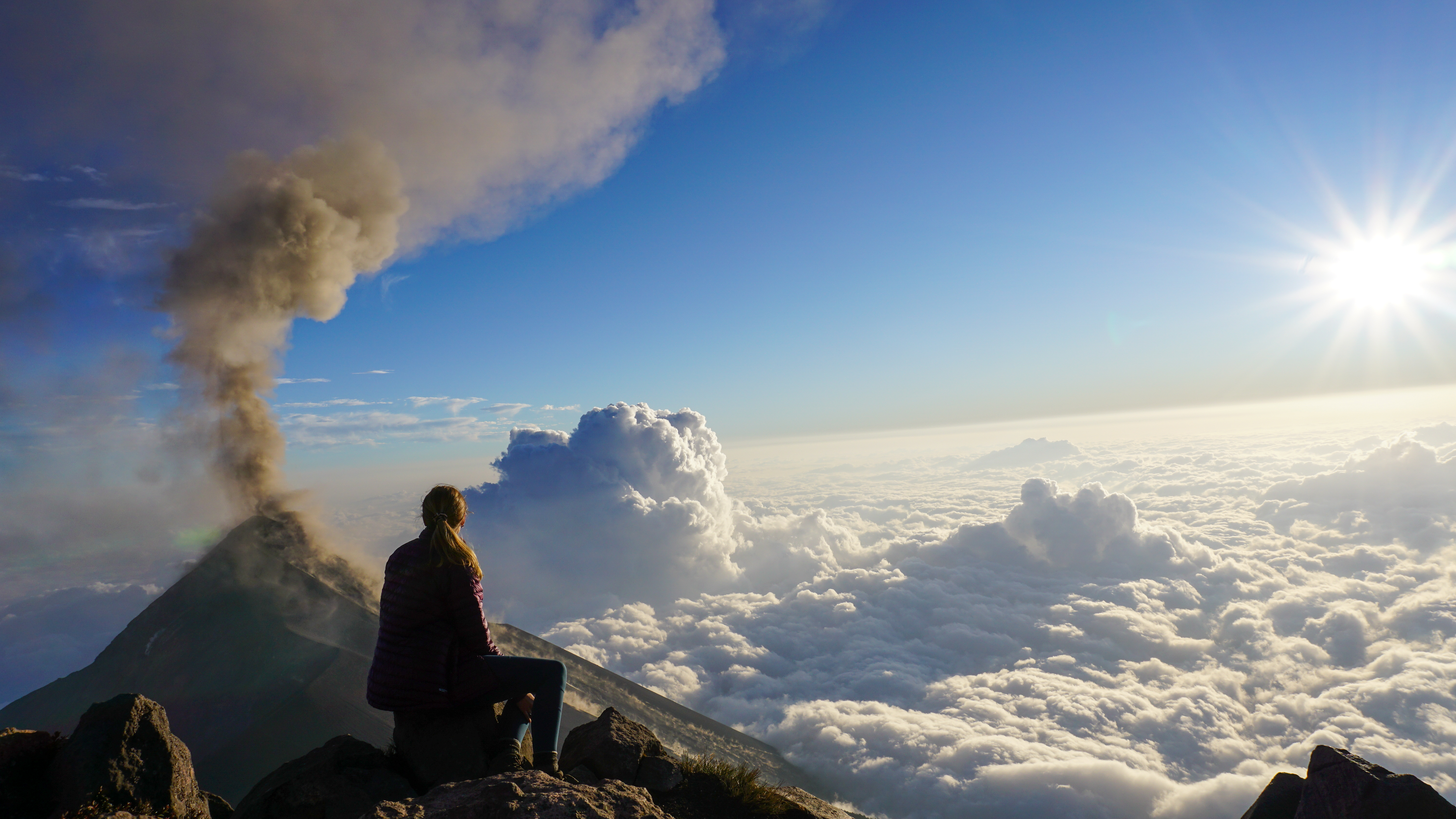
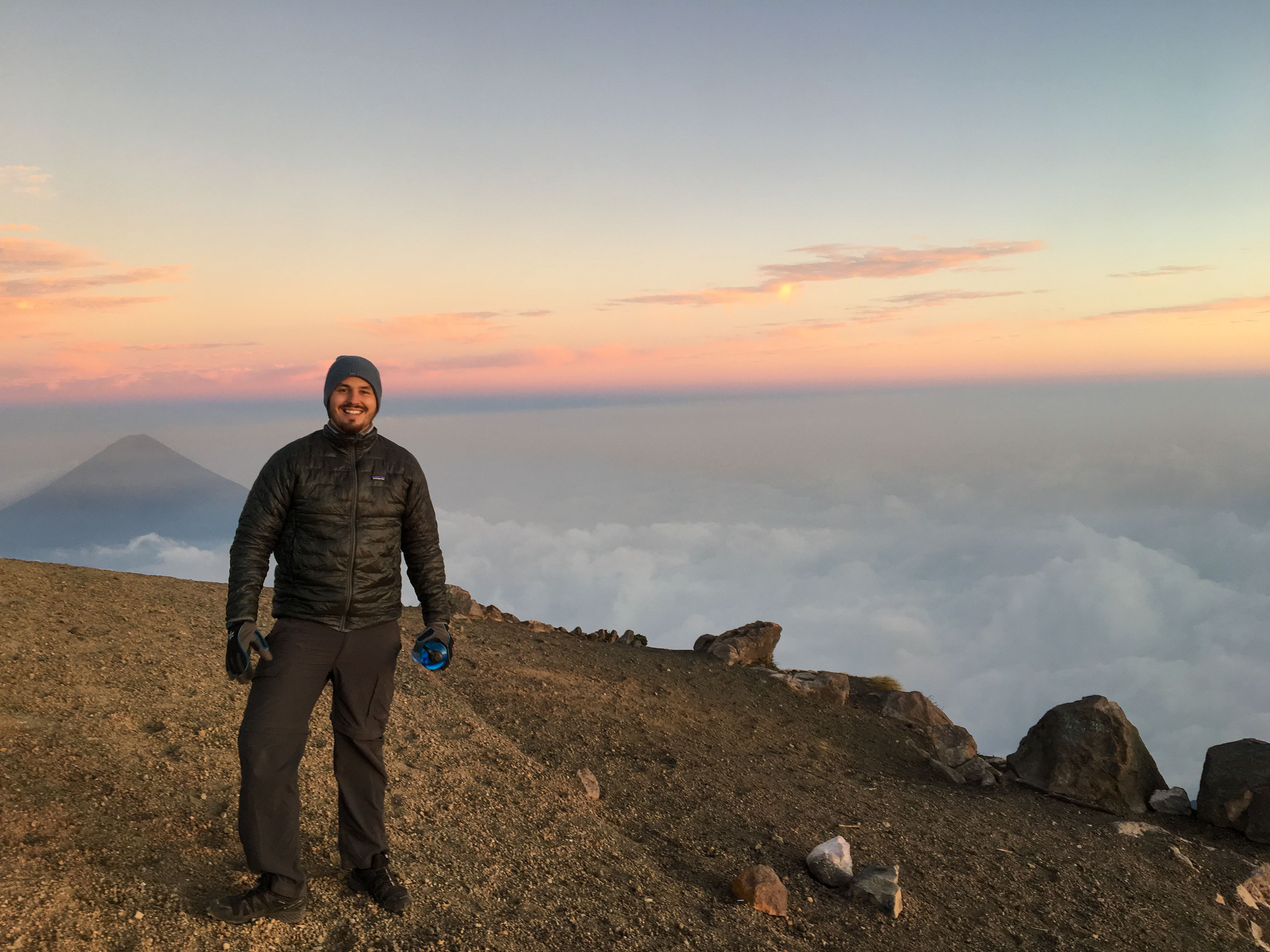
Armed with mild altitude sickness, achy legs and a headtorch, we made our way back to basecamp, bypassing the windy trail we ascended. We dug our heals into the gravel and prepared ourselves for the bizzare decent, which felt like skiing through black snow. Much to our delight, we were greeted at base camp with hot chocolate and settled in to enjoy the explosive view.
Following a rough night sleep mummified in our sleeping bags and wedged between our fellow companions, we awoke in time to see the sunrise before tackling the descent, where it was now our turn to dart sympathetic looks towards to the ascending cohort.
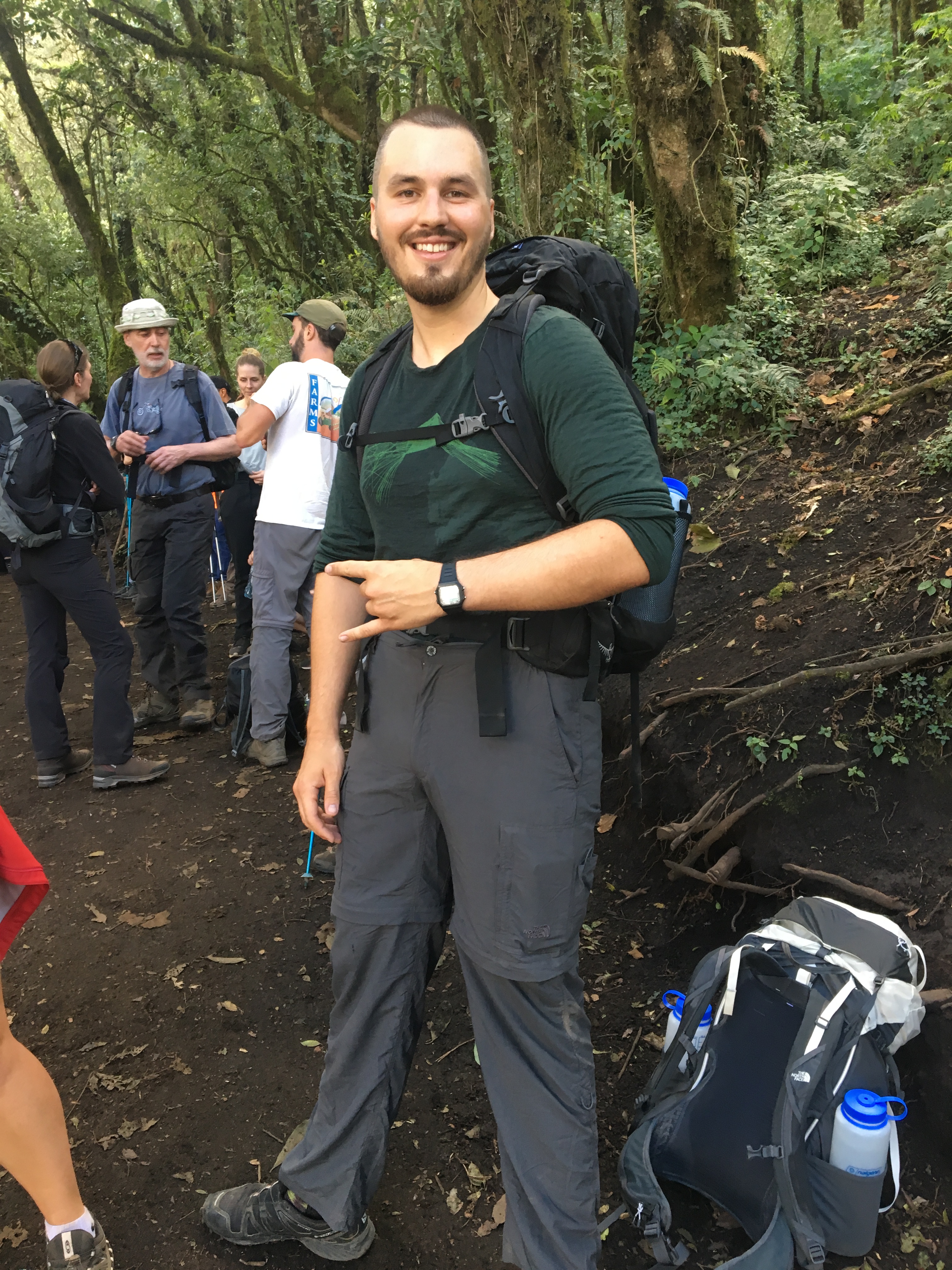
After much anticipation, Harvey eagerly unzipped his new hiking trousers. Nobody was impressed.
Lake Atitlan
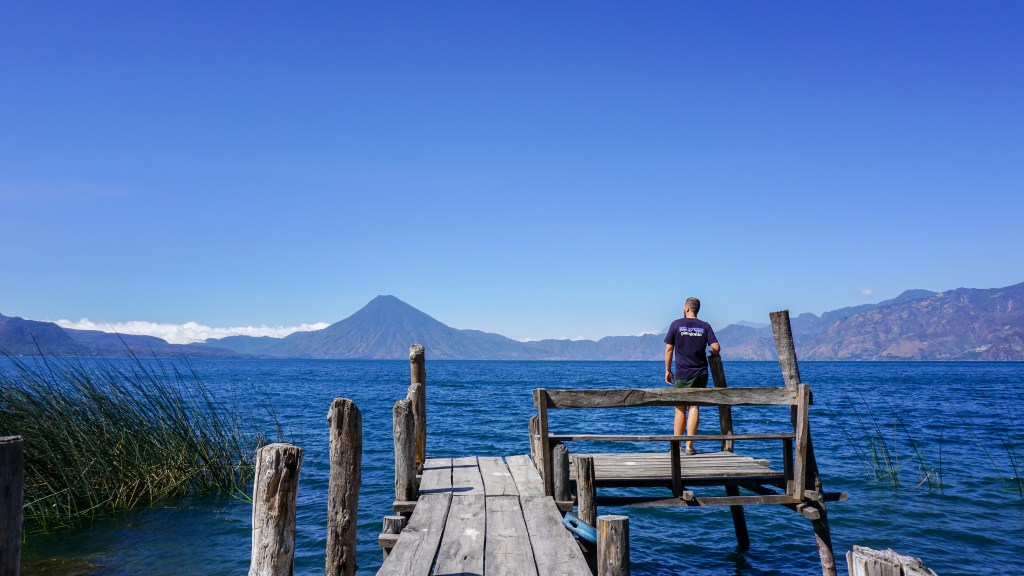
Thousands of years ago, a volcanic explosion occurred, creating a huge crater. Over time, it has filled with rainwater to become what is known today as Lake Atitlan. In recent times, the water has continued to rise and some buildings have been swallowed up by the lake. It’s no wonder why the Maya communities live at the top of the hill!
Lake Atitlan is based in the highlands with views spanning over three extinct volcanoes. Several Mayan villages sit scattered around the banks and each holds their own character and individuality.

San Pedro
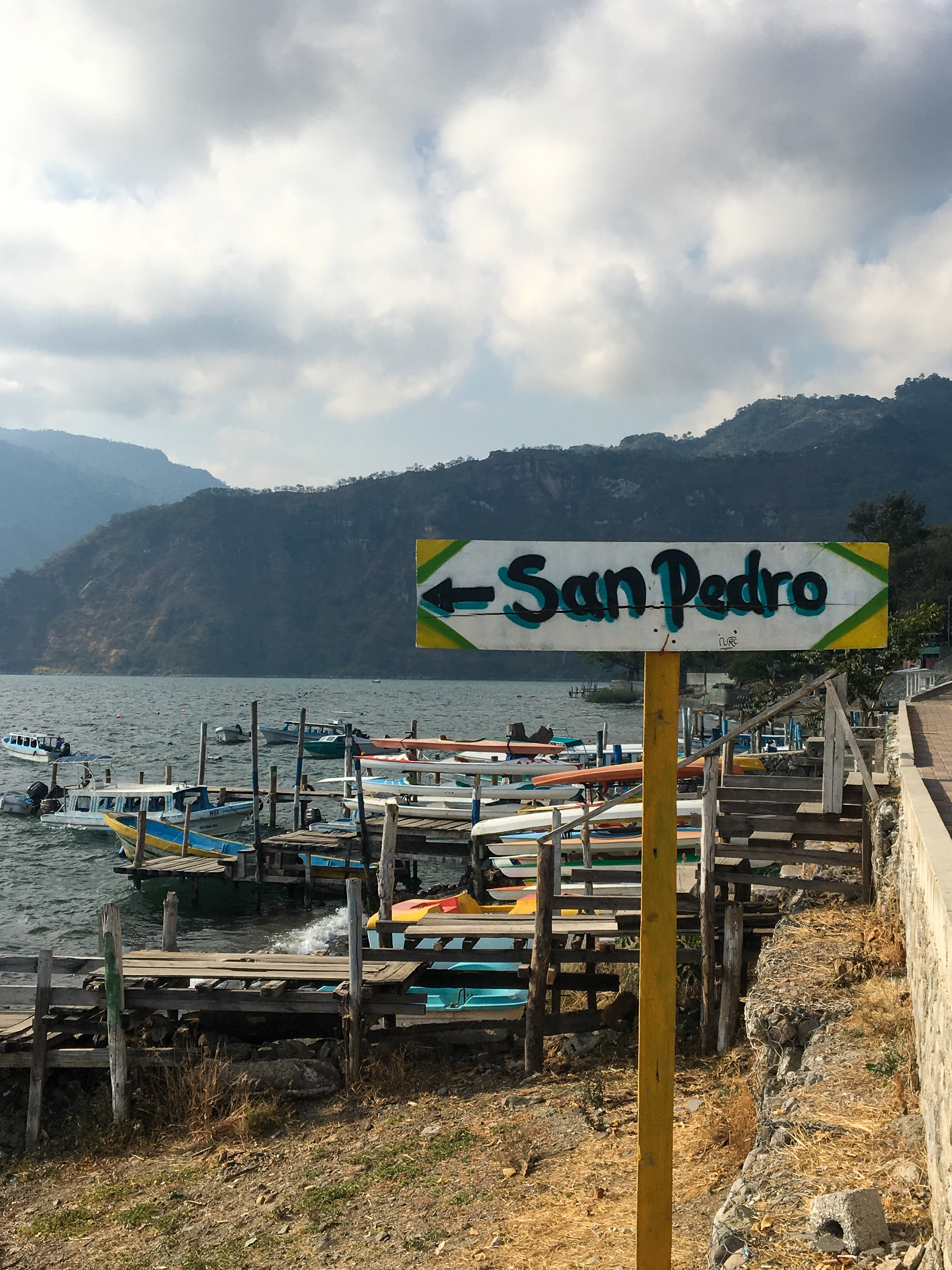
We chose San Pedro as our base for its bustling vibe and central position, which made it easy to reach the nearby villages.
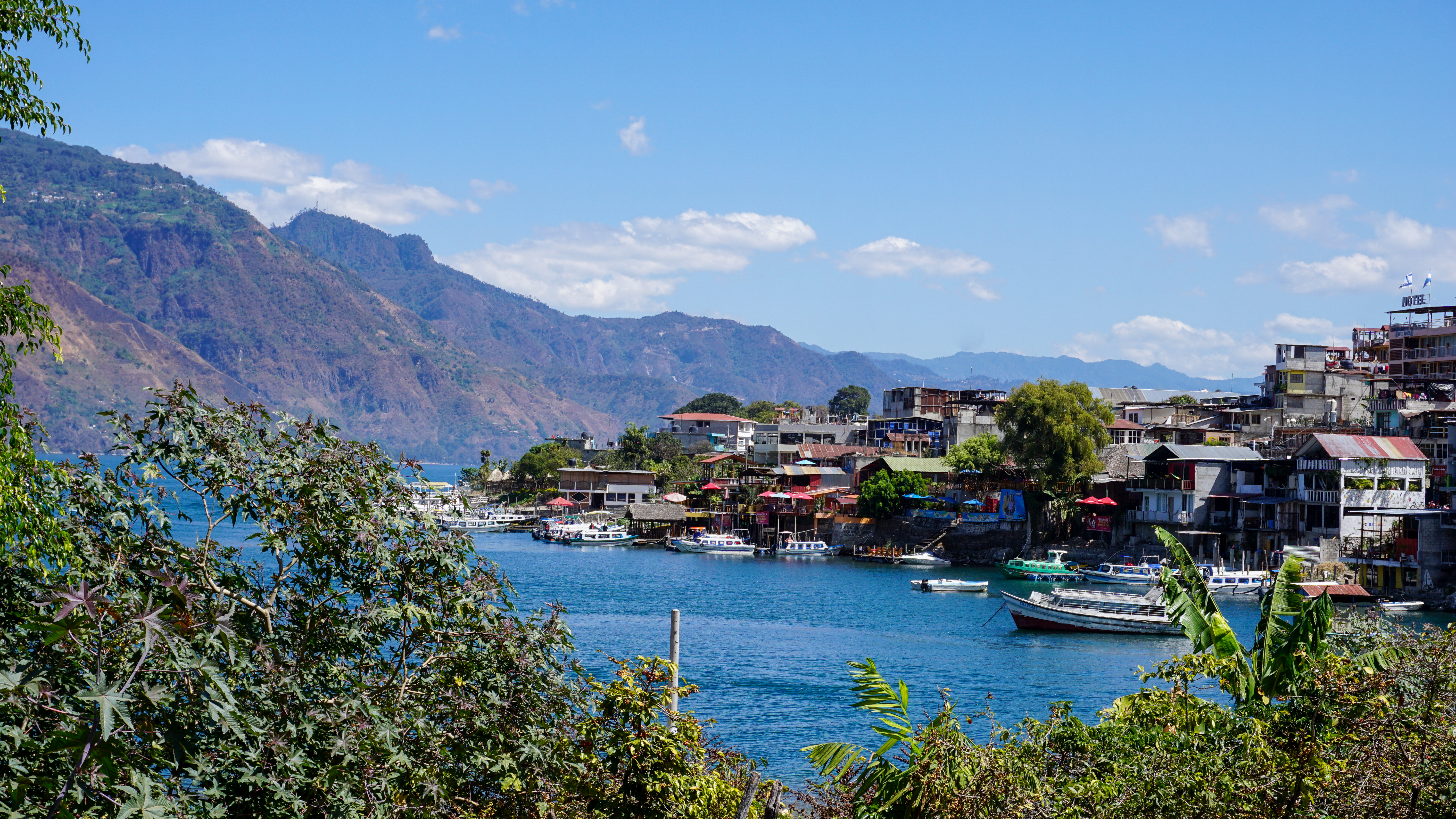
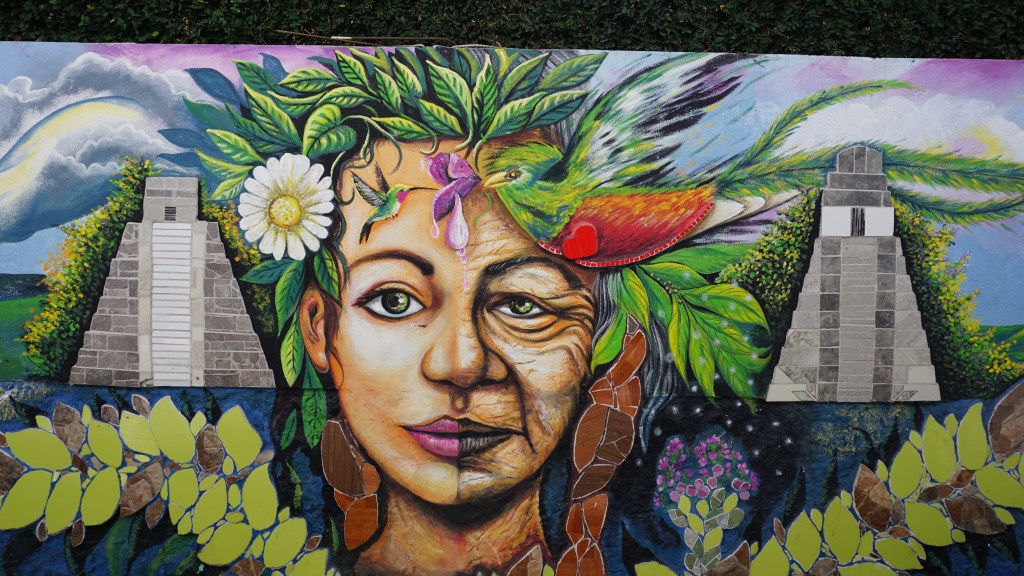
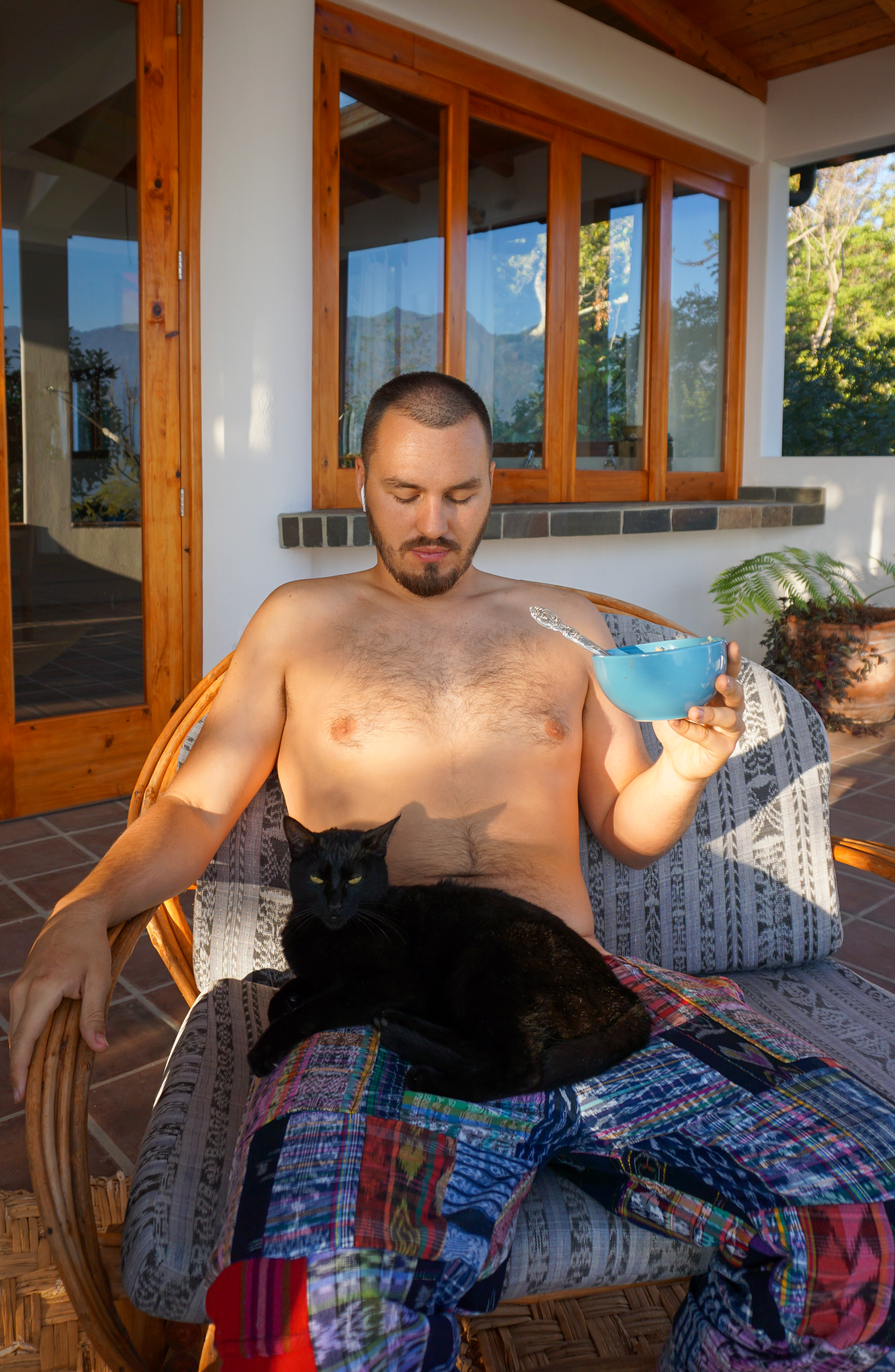
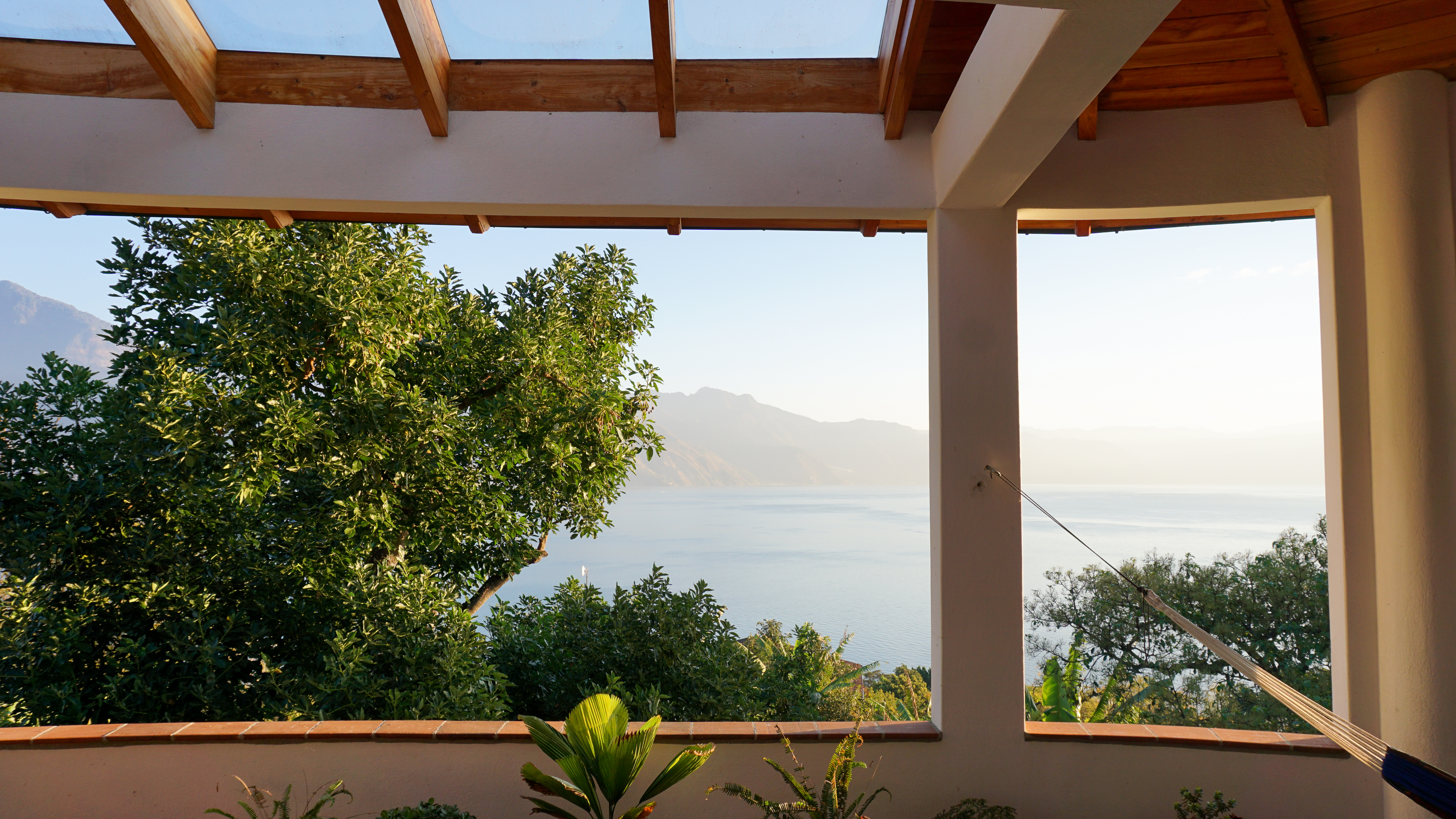
Our Airbnb was a little haven out of town with sweeping views of the lake. We would return home with baskets on our doorstep filled with lentils, black beans and coffee from our host’s crops, as well as eggs from their ducks.

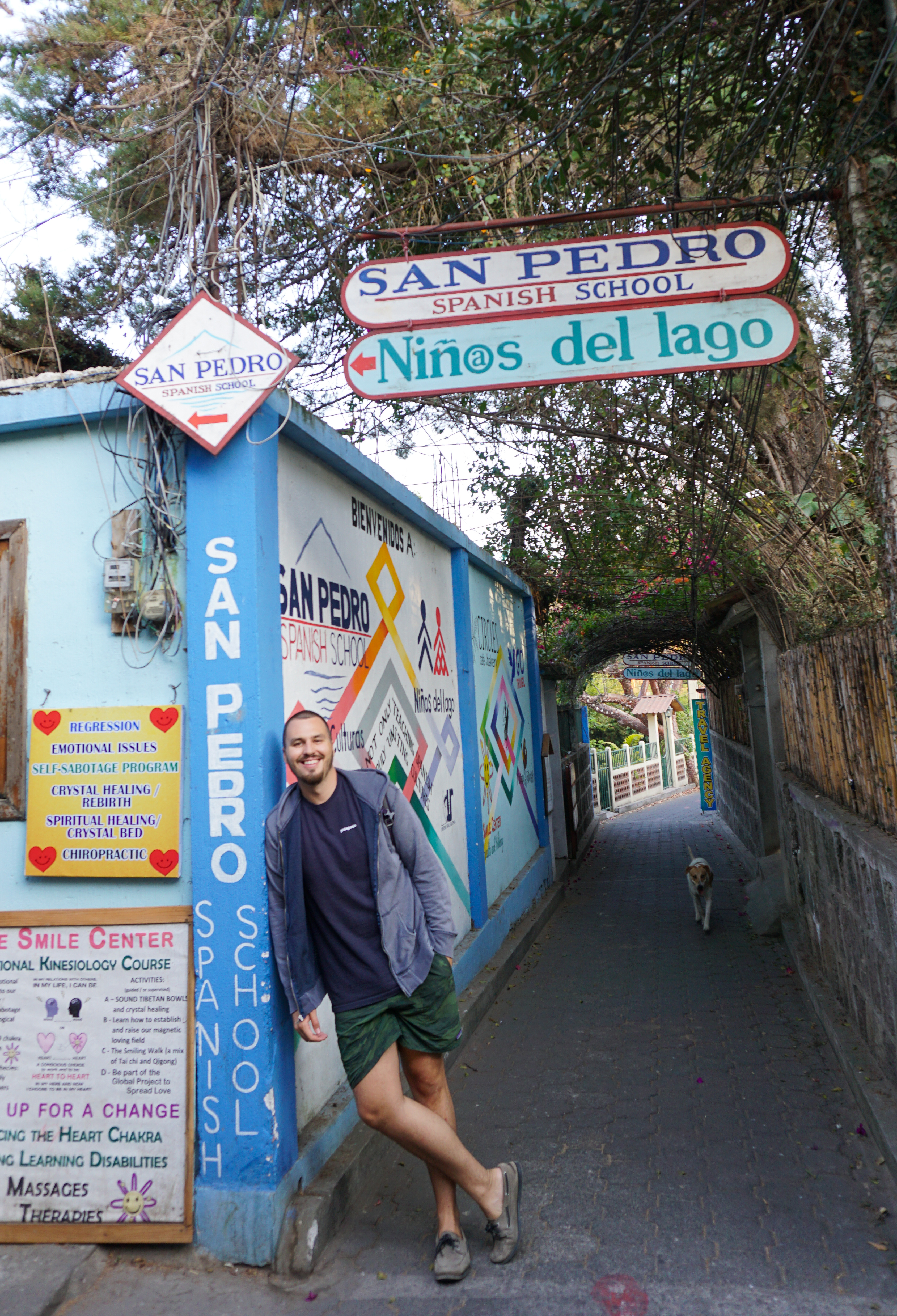
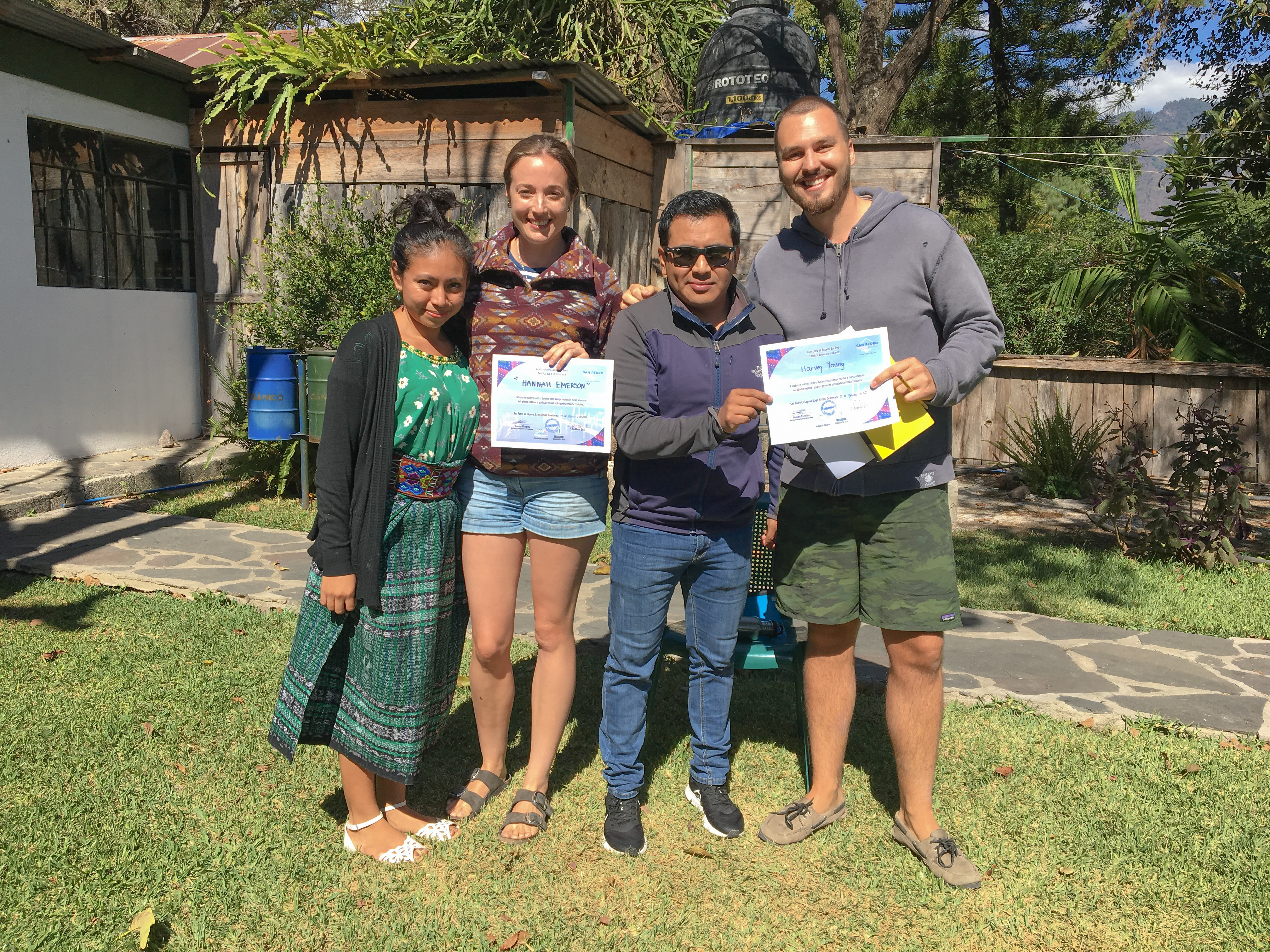
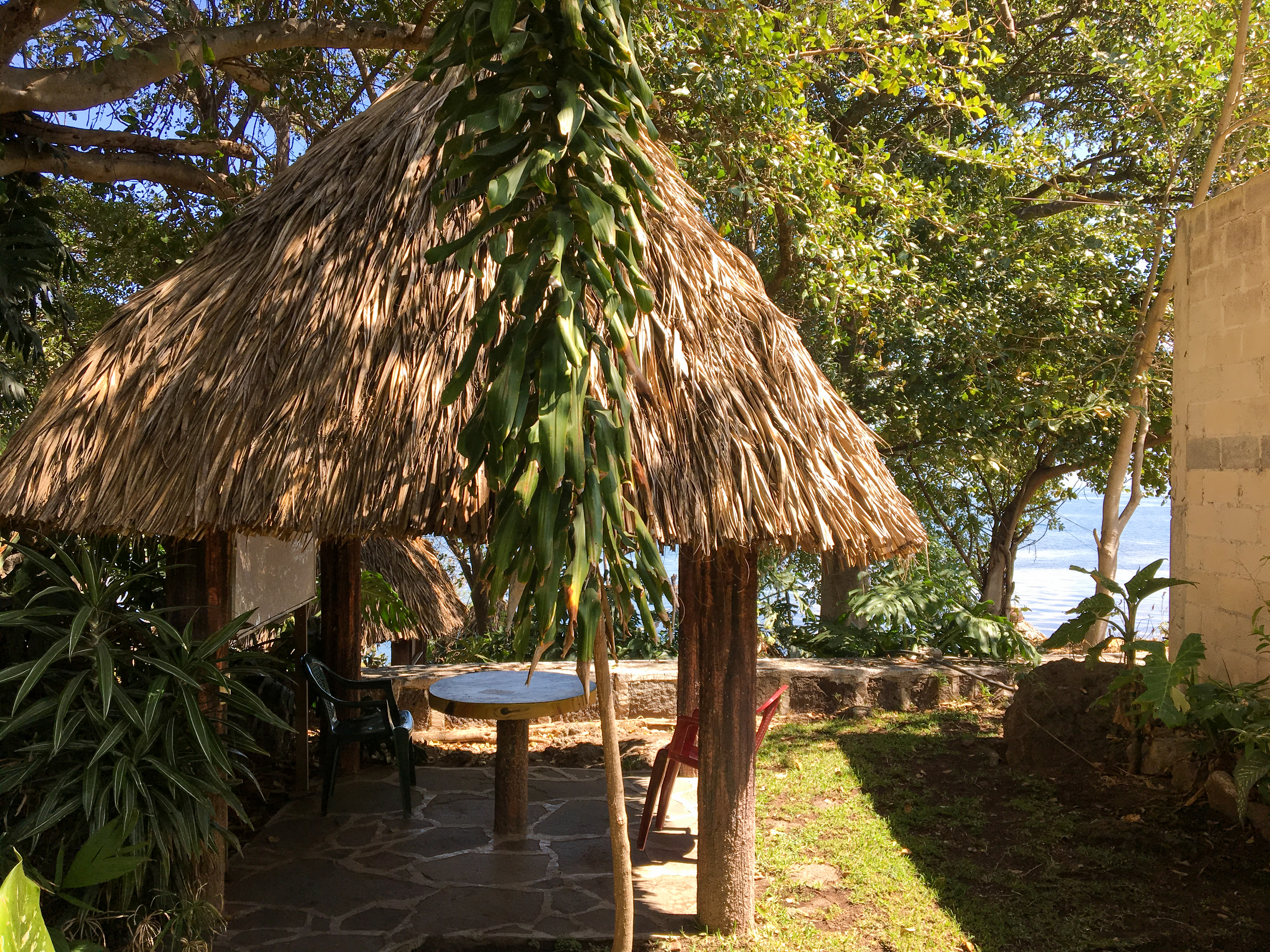
We spent our mornings learning Spanish in little huts overlooking the lake, with our own private tutors, Umberto and Sandy. Umberto, a suave no-nonsense guy, patiently reminded Harvey several times that there is a very important difference between ‘Tengo 26 años’ and ‘Tengo 26 anus’.
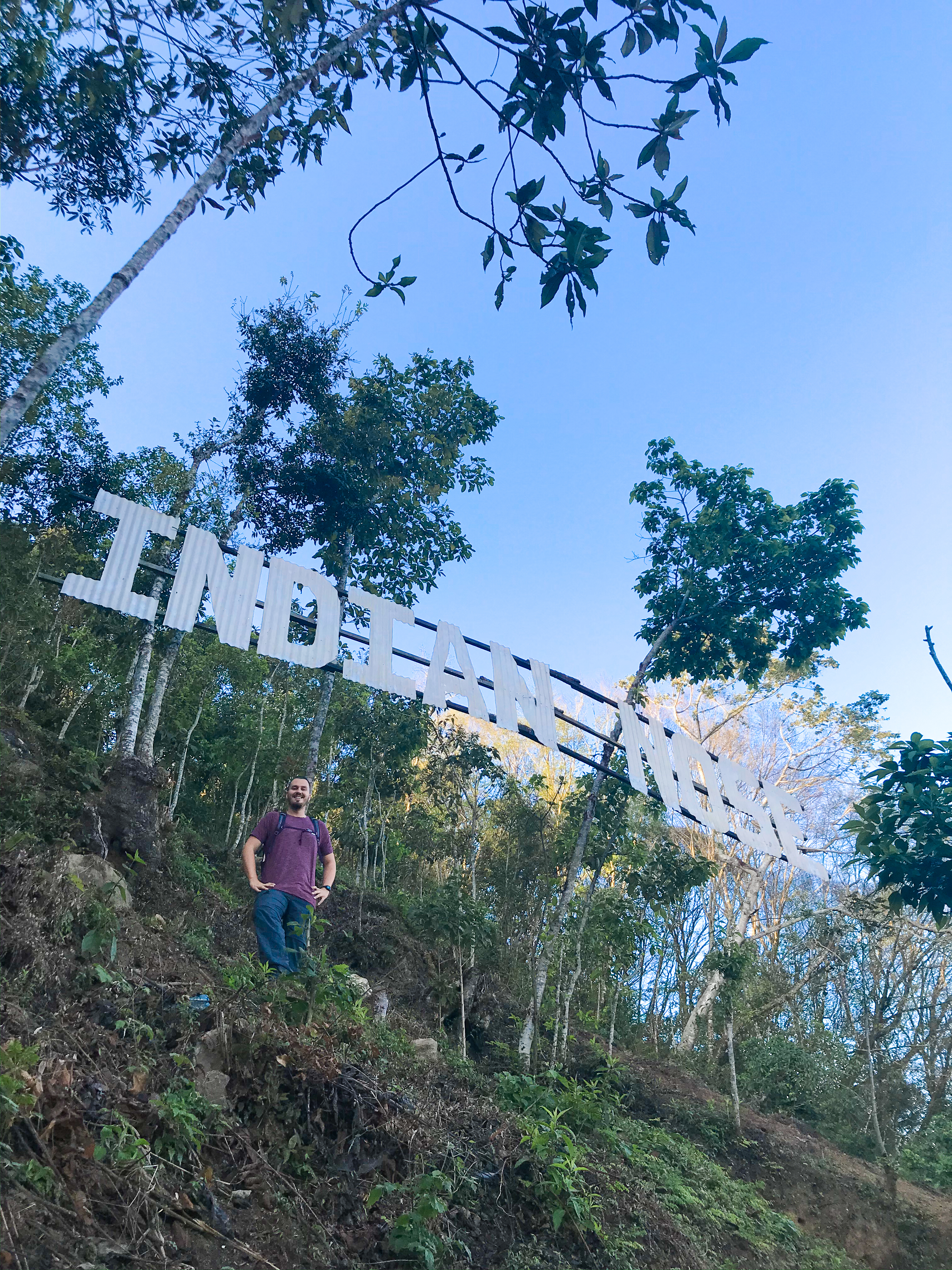
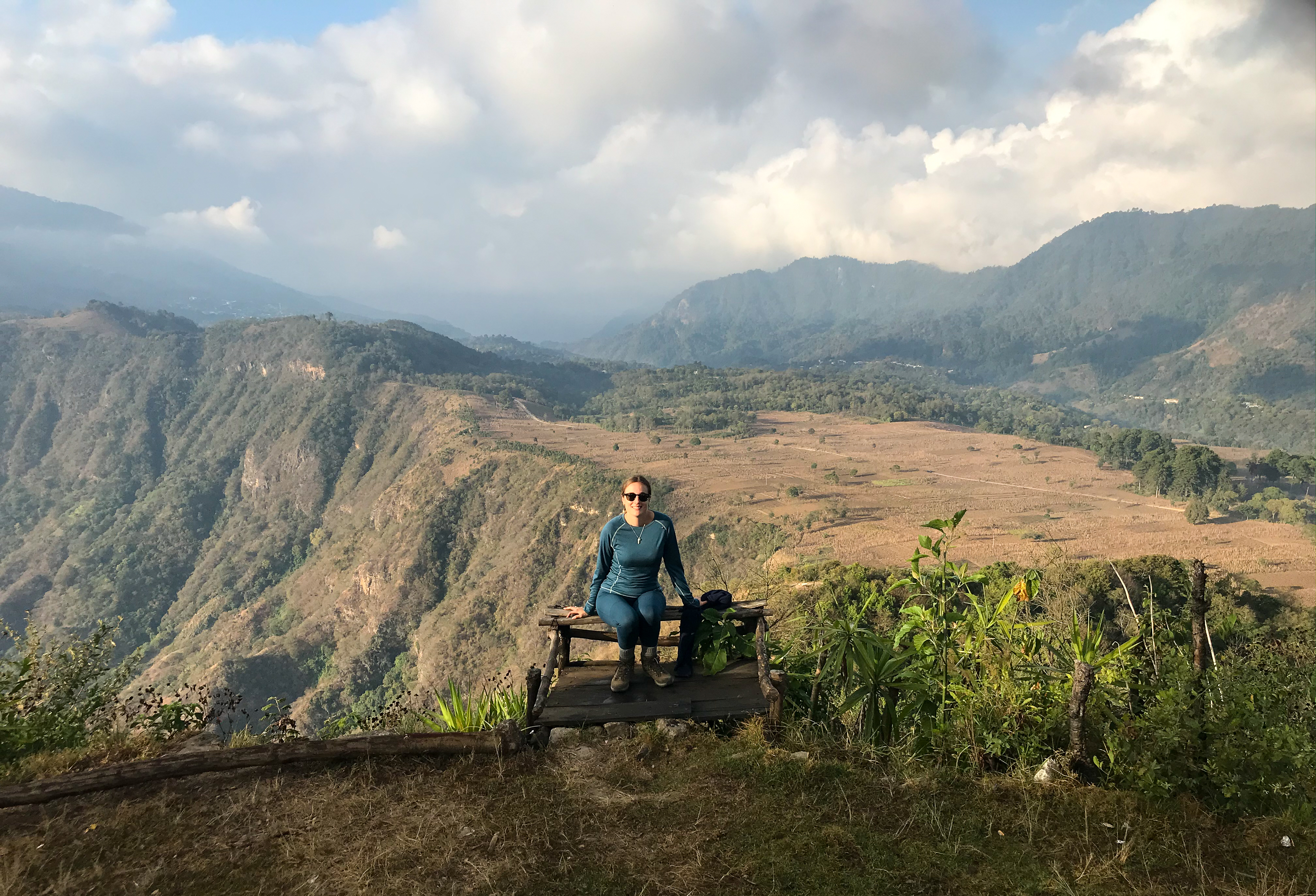
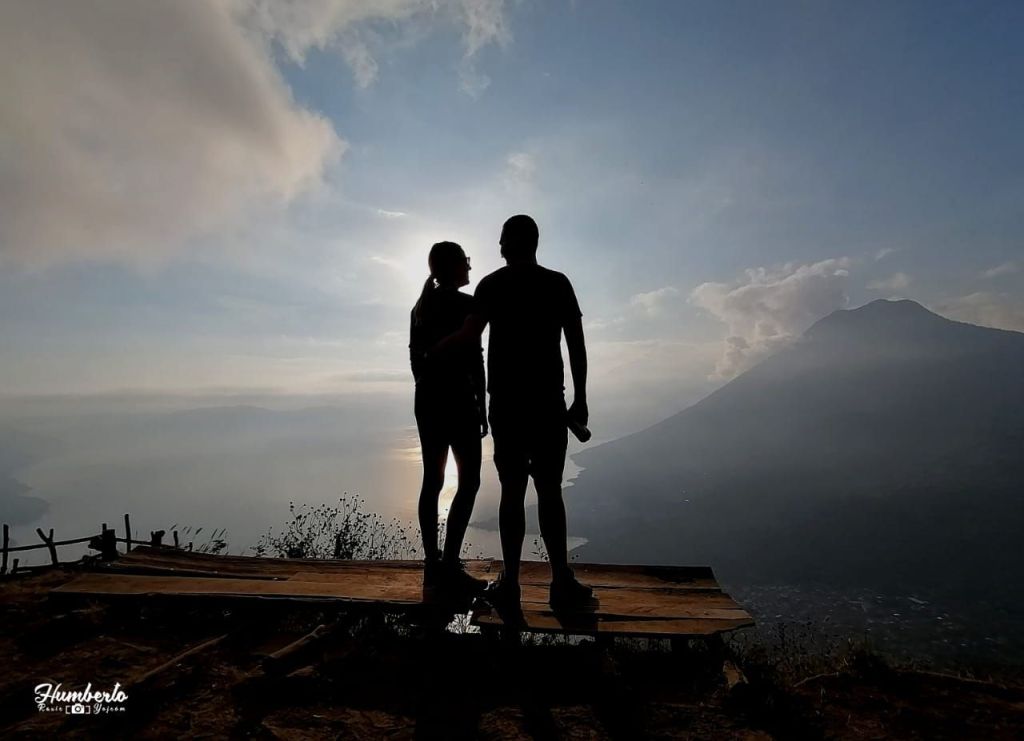
Umberto offered to guide us to Indian Nose, a short hike through farmland in the nearby village of San Juan, offering impressive views over the lake. We boarded a chicken bus at 6am and it became very cozy very quickly as we collected locals along the way!
San Marcos
Also known as the hippie village, San Marcos is a spiritual haven for many ex-pats and visitors. We knew we were heading to the right place when we overhead two people talking on the boat about their negative ions, airbag souls and advocacy for human sacrifice.
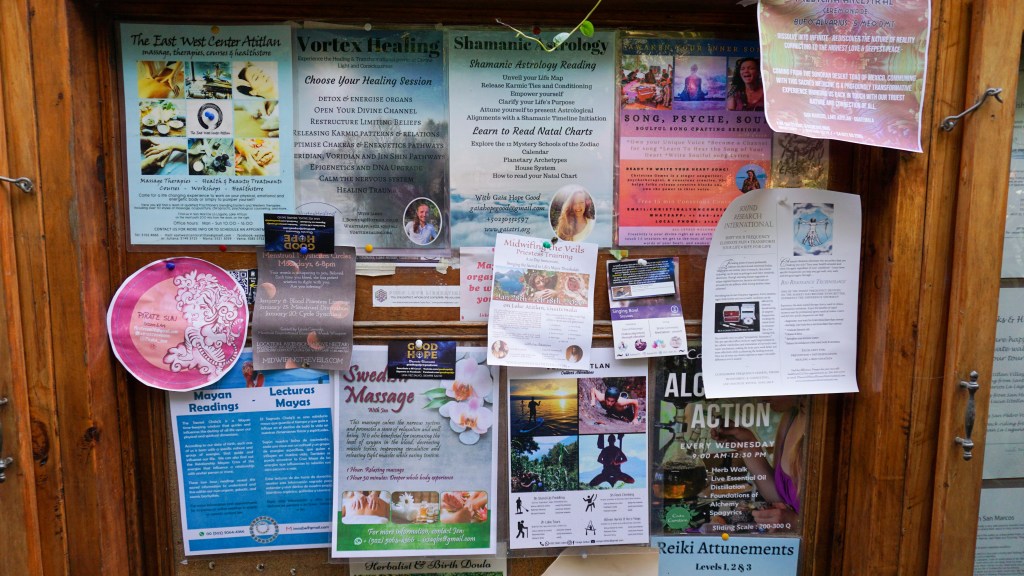
Throughout the village, notice boards advertise what’s on offer, this includes astrological readings, cacao ceremonies and healing sessions. Our visit coincided with the day of the new moon, where a group of hippies was congregated on the shore for a ceremony high on life, hemp and banana skins (and maybe acid).

We visited Reserva Natural del Cerro Tzankujil and walked along the beautiful trail around the lake. The trail was a perfect spot to take a dip, with rocks peppered with people taking in the sun. Harvey braved the cold water and was joined by a golden retriever, whose charm quickly turned to aggression and refused to let Harvey out the water.


San Juan
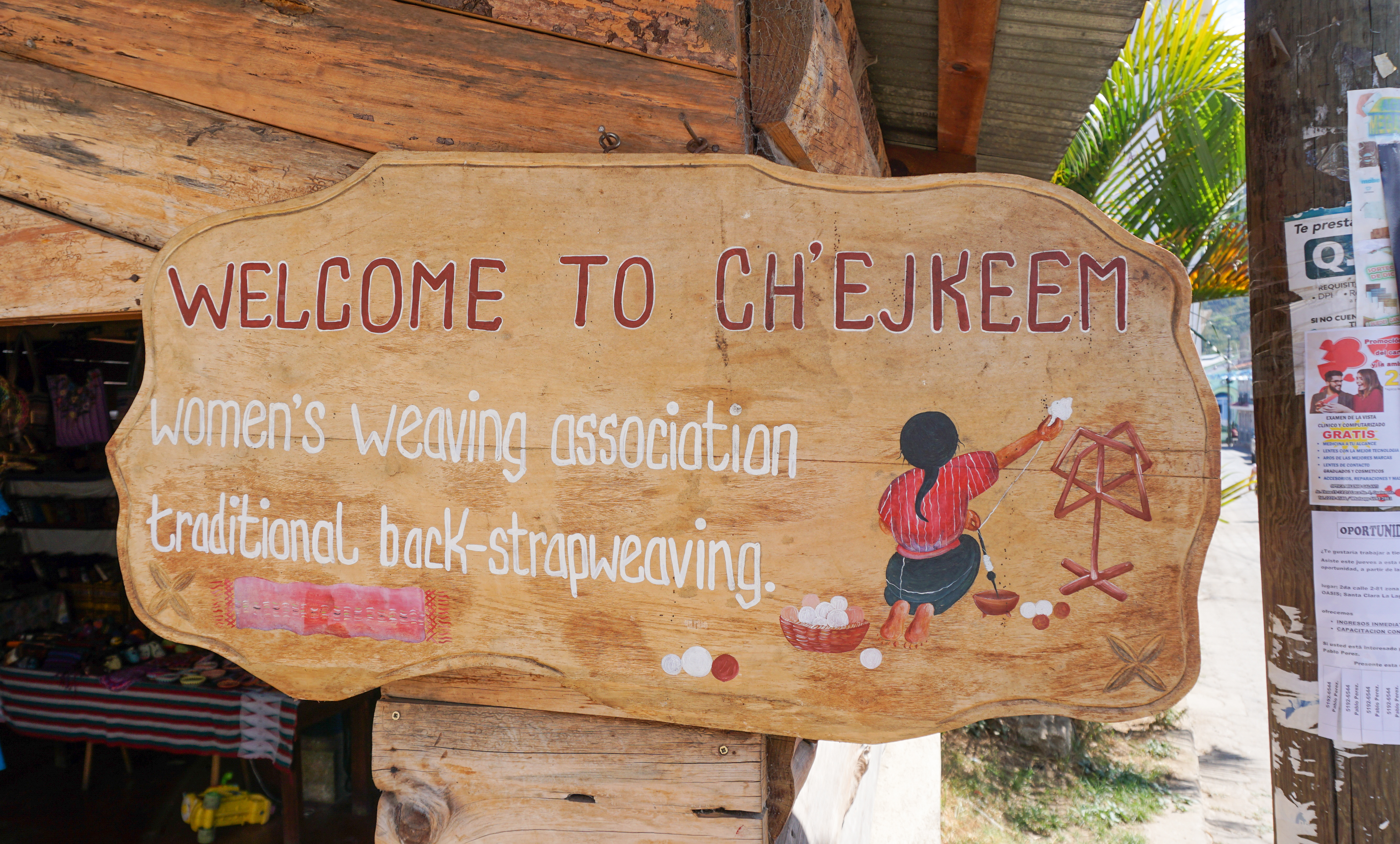
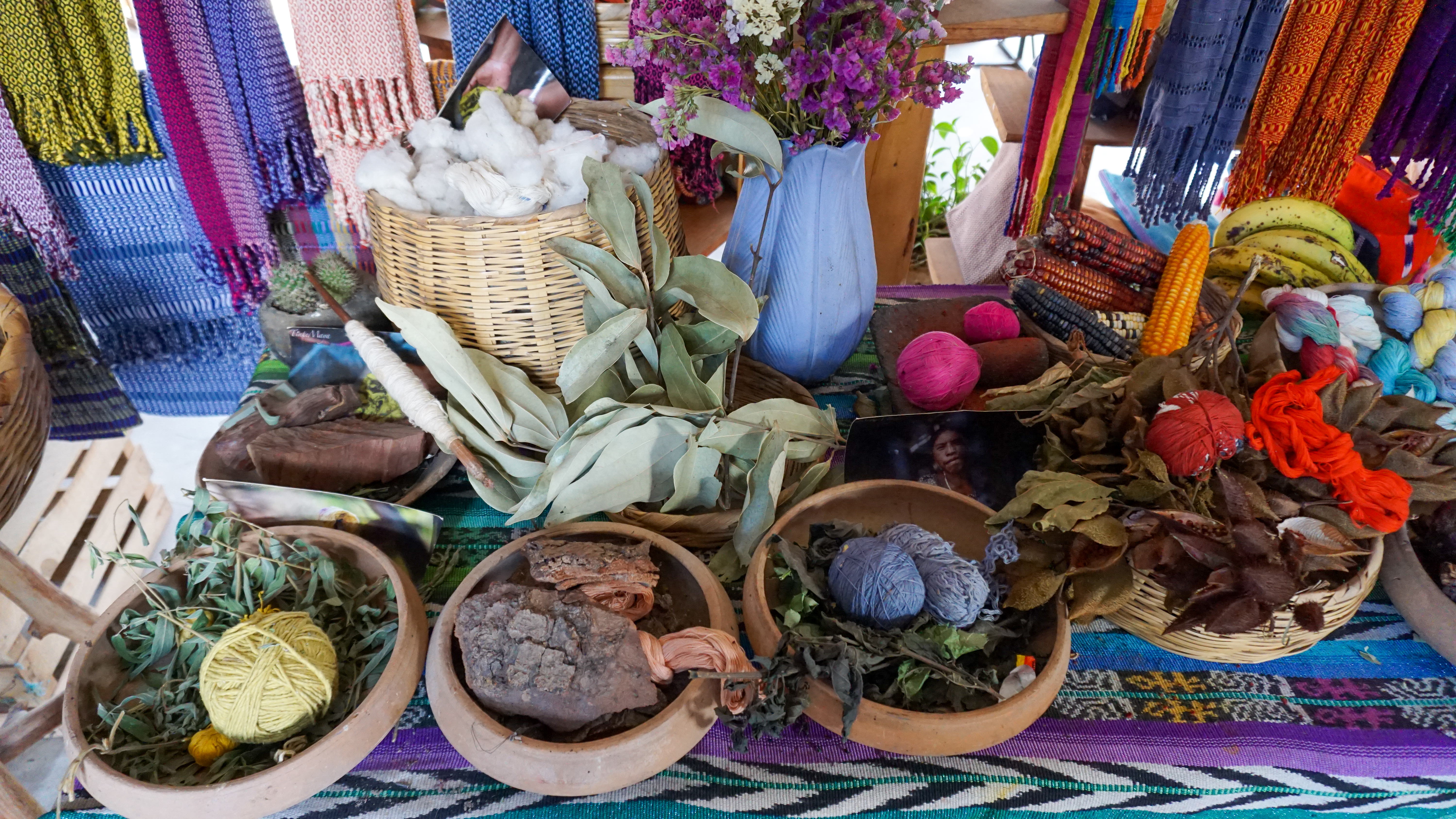
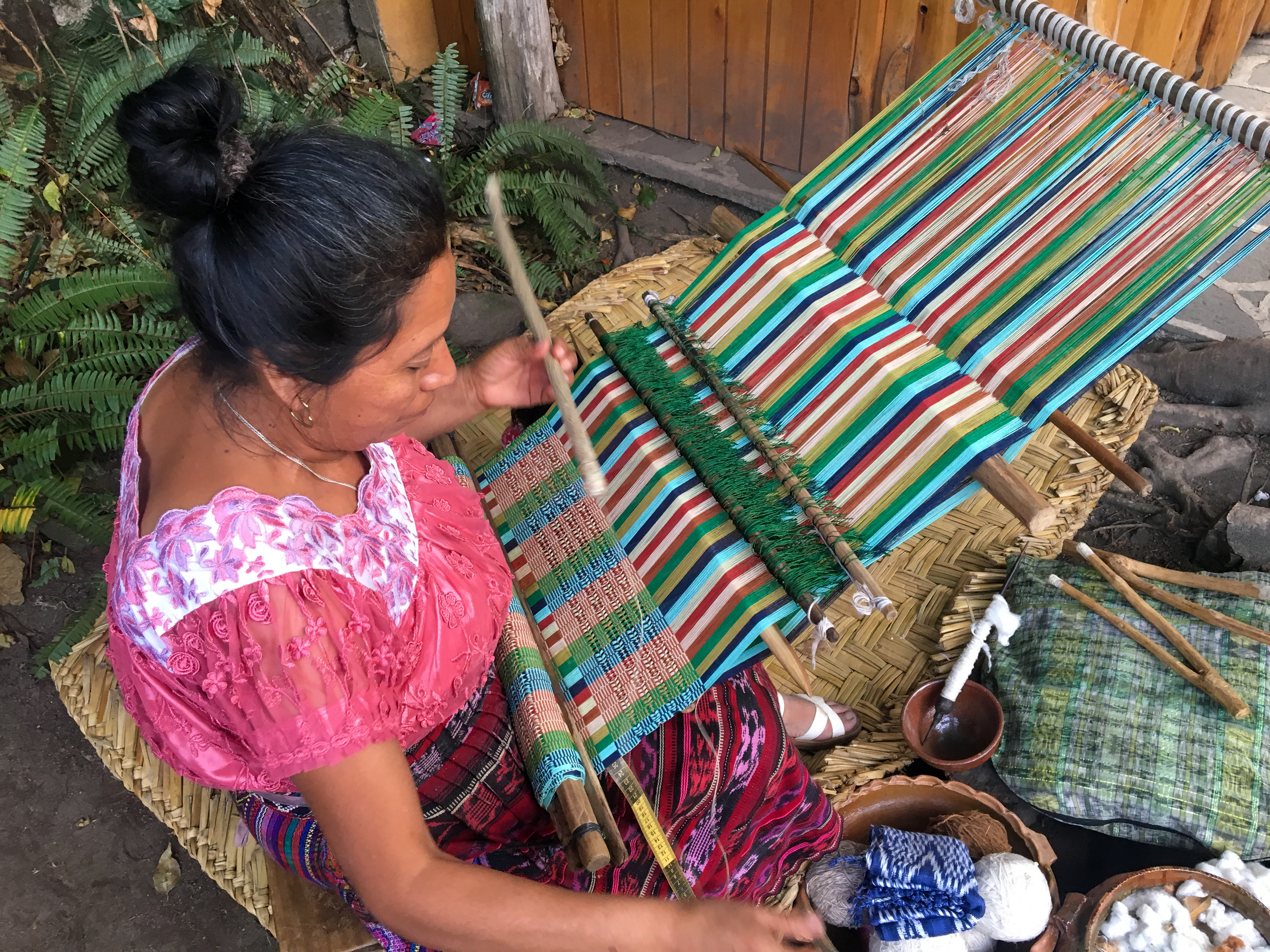
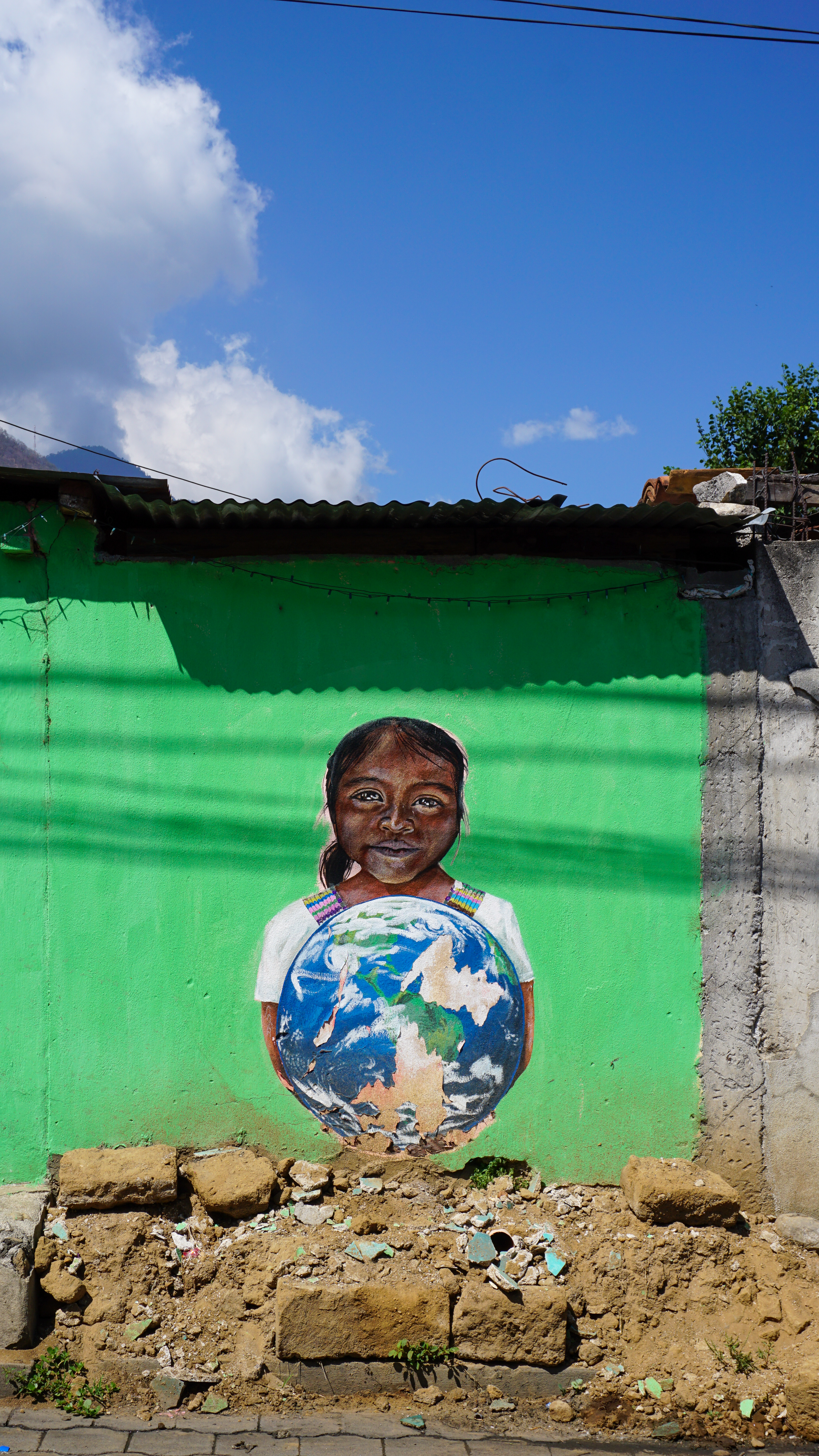
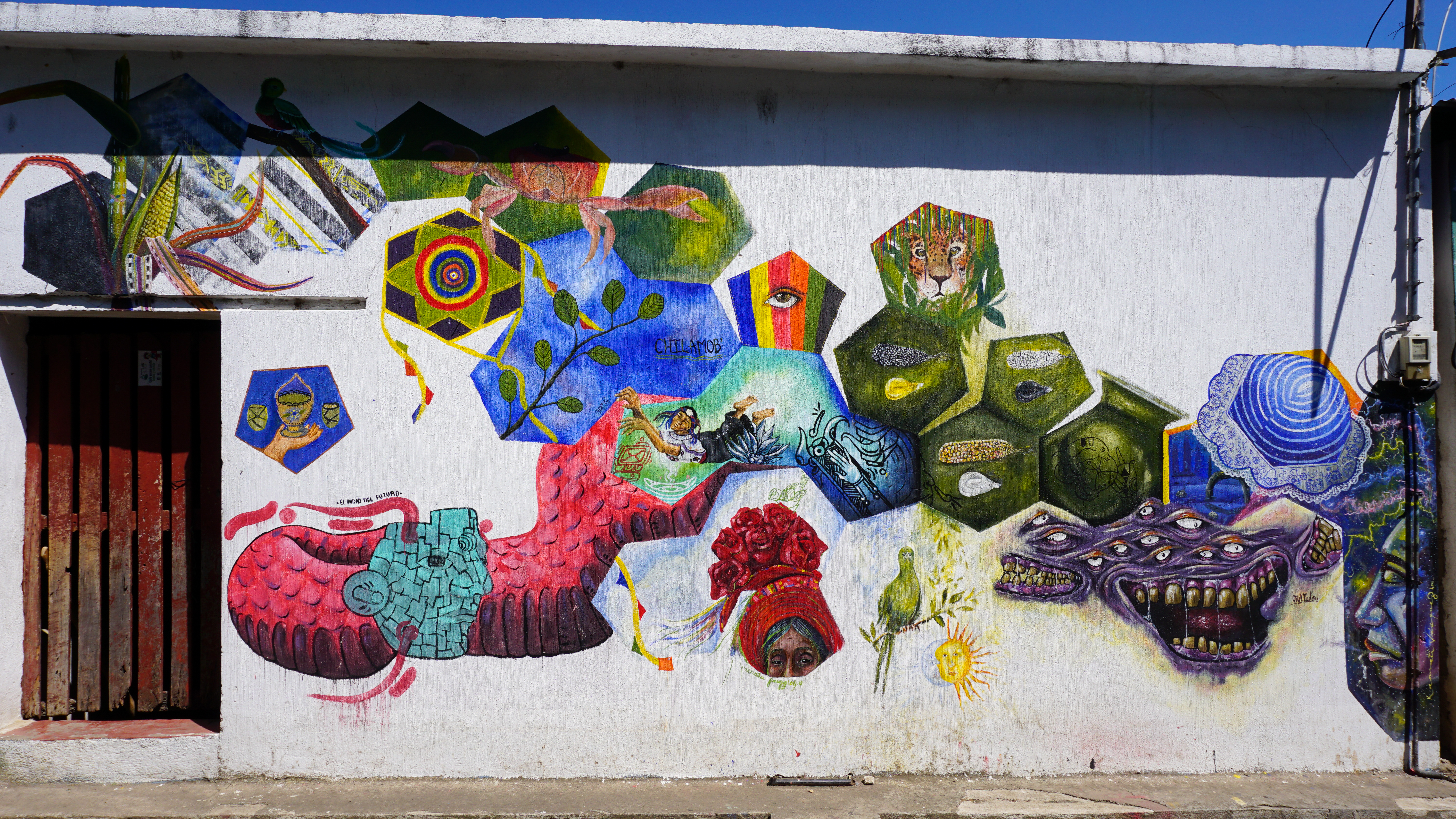
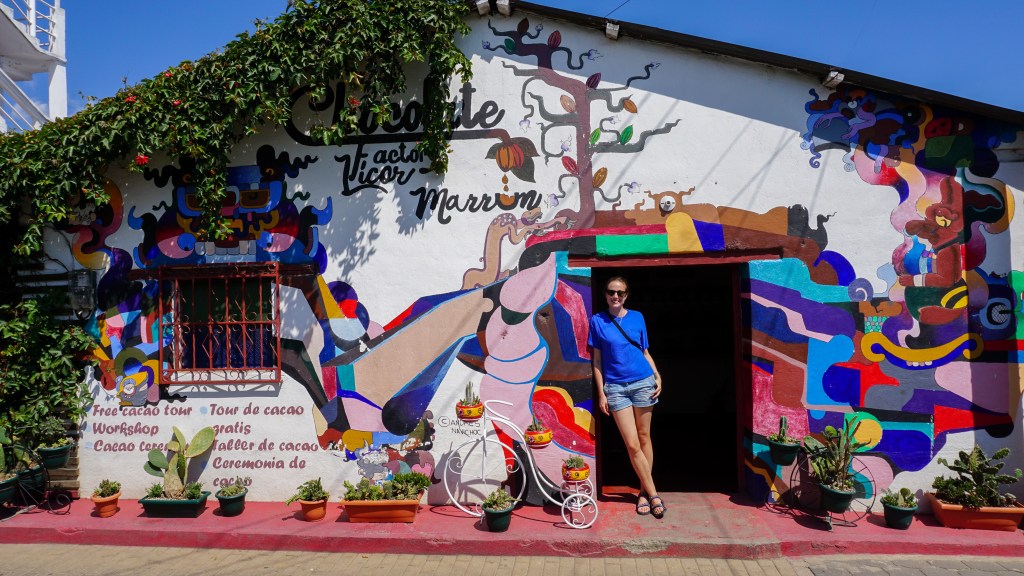
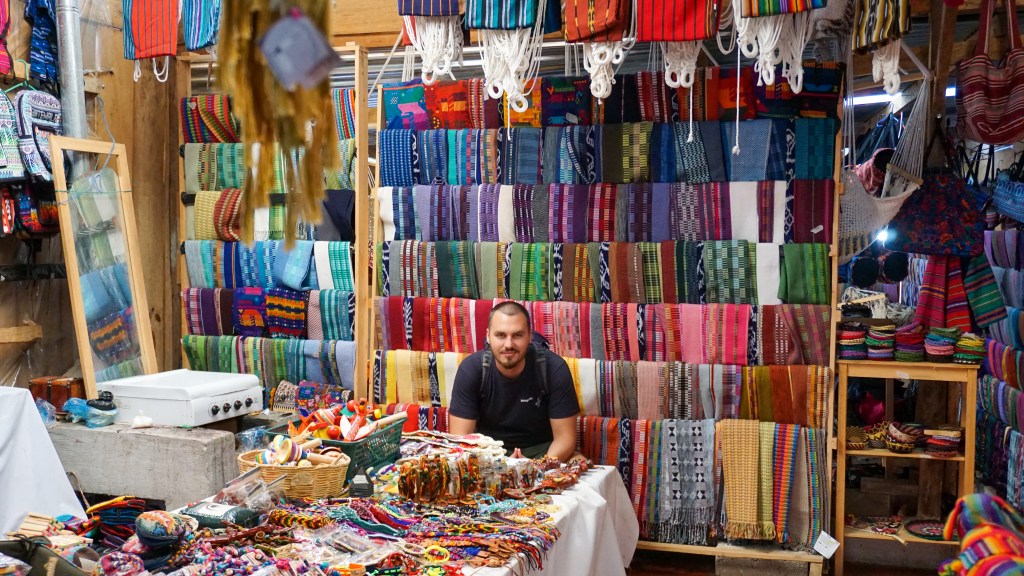
This pretty village is home to women’s weaving cooperatives and bursting with street art. We spent an afternoon stumbling upon colourful murals, visiting textile shops and taking in the serene atmosphere.

Santa Catarina Palopó
Our final few days in Guatemala were spent on the other side of the lake, near the village of Santa Catarina Palopó. As one of the least visited villages in Lake Atitlan, a community project was set up to drive business and tourism to the village; buildings have been painted in different shades of blue with patterns resembling women’s huipil tops. Families can work with the project to decorate their homes using specific base colours layered with symbols of nature (butterfly, peacock or deer).


Next stop: Costa Rica!
 Travel Blog